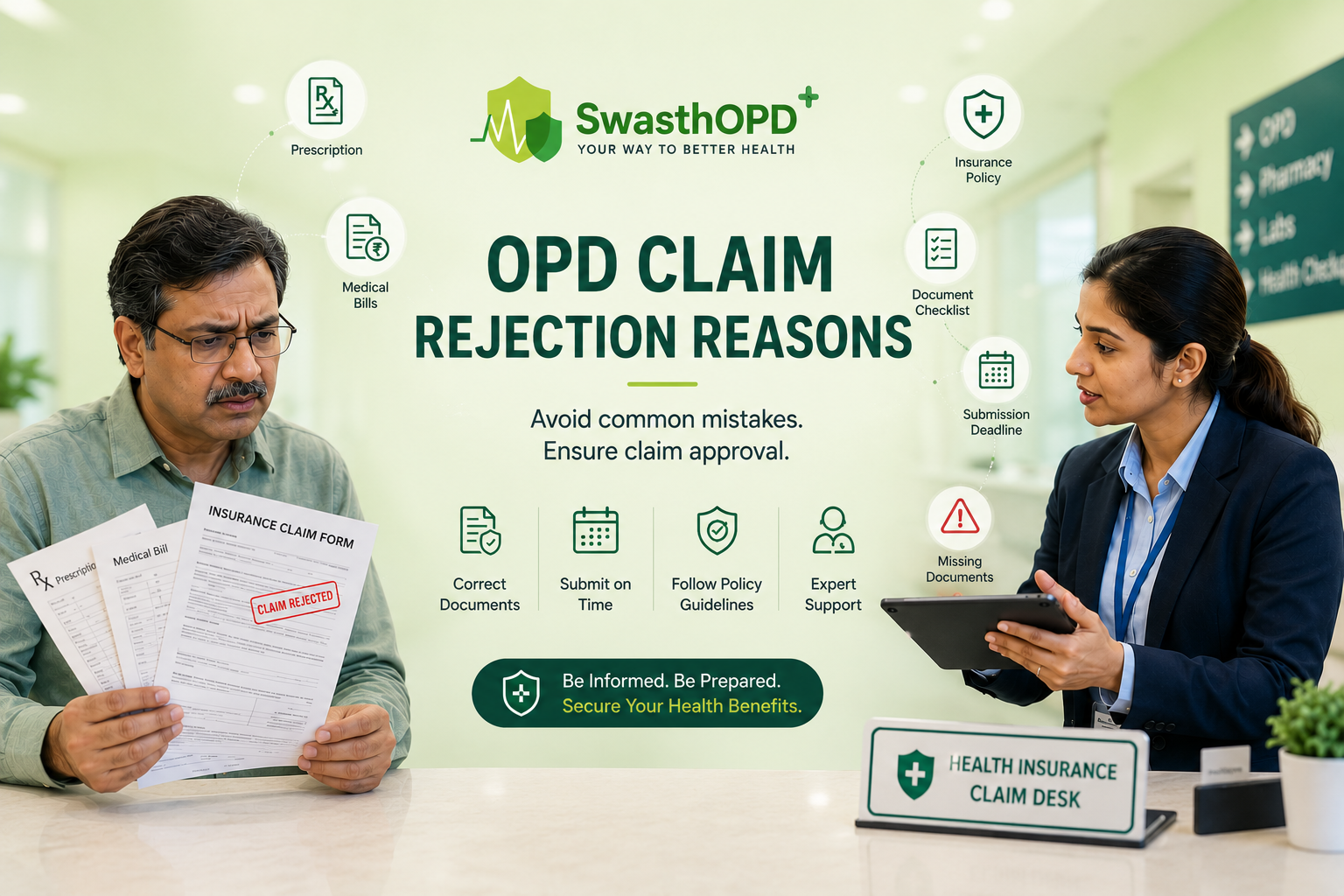
OPD Claim Rejection Reasons: Common Mistakes and How to Avoid Them
Medical expenses are increasing every year, and many people now use OPD benefits to manage doctor visits, consultation fees, diagnostic tests, and medicines. OPD (Outpatient Department) claims can help reduce healthcare spending. But many policyholders become disappointed when their insurance company does not approve their request.
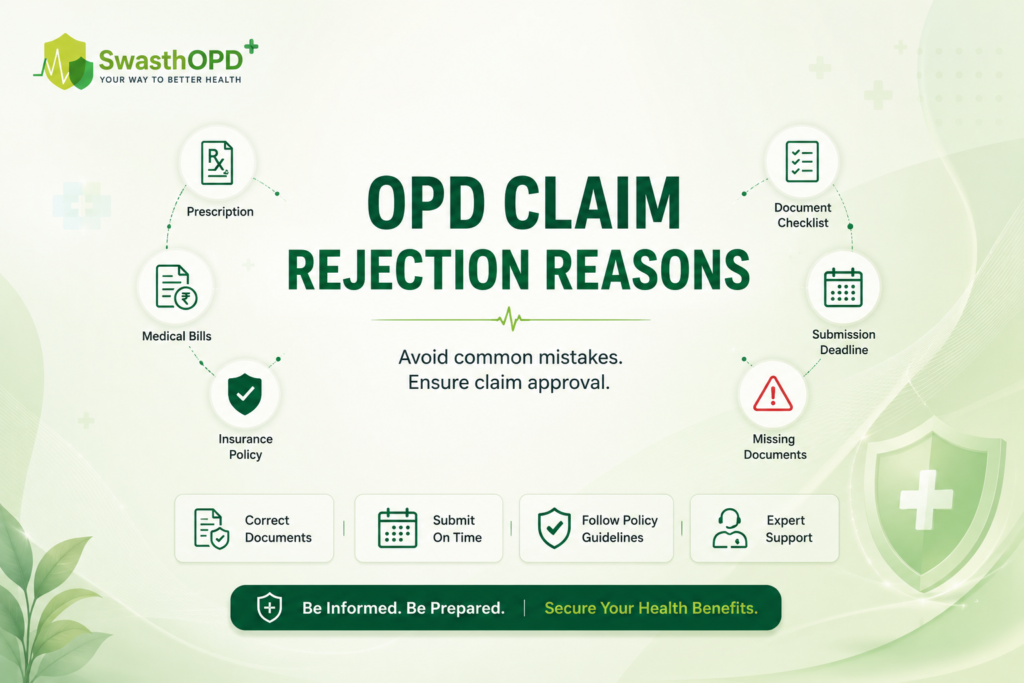
Understanding OPD claim rejection reasons is important because small mistakes can lead to delays or rejection. In this article, we explain the most common reasons behind claim rejection and how you can improve the chances of getting approval.
What Is an OPD Claim?
An OPD claim is a request made to an insurance company for reimbursement or settlement of outpatient medical expenses. These expenses usually happen without hospital admission.
OPD claims may include:
- Doctor consultation fees
- Diagnostic tests
- Prescribed medicines
- Minor medical procedures
- Follow-up visits
Every insurance company has different rules for OPD coverage. Reading the policy carefully can help avoid future issues.
Why Understanding OPD Claim Rejection Reasons Is Important
Many people think that if they have insurance, every medical expense will be covered. But this is not always true. Insurance companies follow conditions and documents before approving a claim.
Knowing OPD claim rejection reasons can help:
- Save time
- Reduce financial stress
- Improve claim approval chances
- Avoid document errors
- Understand policy conditions better
1. Missing Required Documents
One of the biggest OPD claim rejection reasons is incomplete documents.
Insurance companies normally ask for:
- Claim form
- Doctor prescription
- Medical bills
- Payment receipt
- Diagnostic reports
- Policy details
If even one important paper is missing, your claim may get delayed or rejected.
Solution:
Before submission, make a checklist and confirm all documents are attached.
2. Treatment Not Covered Under Policy
Many OPD plans only cover selected services.
Examples of commonly excluded items:
- Cosmetic treatment
- Non-prescribed medicines
- Wellness products
- Experimental treatments
People often submit claims without checking coverage details.
Solution:
Read policy inclusions and exclusions before making an OPD claim.
3. Delay in Claim Submission
Insurance companies usually provide a time limit for claim submission.
For example:
- Submit within 15 days
- Submit within 30 days
- Submit within 60 days
Missing the deadline becomes one of the common OPD claim rejection reasons.
Solution:
Submit documents as soon as treatment is completed.
4. Incorrect Information in Claim Form
Small mistakes in forms can create big problems.
Examples:
- Wrong policy number
- Incorrect treatment date
- Wrong patient details
- Spelling errors
Insurance verification teams check all information carefully.
Solution:
Review the form before final submission.
5. Claiming Without Doctor Prescription
Many insurance providers only accept OPD expenses if prescribed by a registered doctor.
If medicines or tests are done without prescription, approval chances become low.
Solution:
Always keep signed doctor prescriptions.
6. Expenses Beyond Policy Limits
Most OPD insurance plans have yearly limits.
Example:
- Annual OPD limit ₹10,000
- Your expenses ₹15,000
The extra amount may not be approved.
Solution:
Track your yearly OPD usage.
7. Non-Network Hospital or Clinic
Some insurers allow cashless services only at approved network clinics.
Using non-network facilities may lead to reimbursement issues.
Solution:
Check network hospitals before treatment.
8. Duplicate Claim Submission
Submitting the same bill multiple times can trigger rejection.
Insurance companies use systems to identify duplicate claims.
Solution:
Maintain records and submit only once.
9. Fake or Modified Bills
Submitting altered documents is one of the serious OPD claim rejection reasons.
Insurance providers verify:
- Bill number
- Hospital details
- Doctor registration
- Payment history
Solution:
Use only original documents.
10. Waiting Period Not Completed
Some policies apply waiting periods before OPD benefits become active.
Example:
- 30 days waiting
- 90 days waiting
Claiming early may cause rejection.
Solution:
Check waiting period before making claim.
11. Treatment Outside Coverage Period
If treatment date falls outside policy validity, the claim may not be accepted.
Solution:
Renew policy on time.
12. Prescription and Bills Not Matching
Insurance companies compare treatment details.
Examples:
- Different medicine names
- Different consultation dates
- Different patient names
Mismatch becomes one of major OPD claim rejection reasons.
Solution:
Review all bills before uploading.
13. Cash Payment Without Proof
If you pay in cash and do not keep receipt, verification becomes difficult.
Solution:
Keep digital payments or official receipts.
14. Pre-Existing Conditions Rules
Some policies limit OPD coverage for existing illnesses.
Solution:
Understand disclosure requirements before purchasing.
15. Claim Submitted Under Wrong Category
Sometimes people submit OPD claims under hospitalization section.
This creates processing delays.
Solution:
Select correct claim category.
How to Avoid OPD Claim Rejection
Follow these simple steps:
Keep All Records
Save:
- Bills
- Reports
- Prescriptions
- Receipts
Read Policy Terms
Understand:
- Coverage
- Limits
- Waiting periods
Submit Early
Avoid deadline problems.
Double Check Forms
Verify details before upload.
Contact Customer Support
Ask questions if policy rules are not clear.
Documents Usually Required for OPD Claims
Most insurance providers ask for:
| Document | Purpose |
|---|---|
| Claim Form | Claim request |
| Doctor Prescription | Treatment proof |
| Bills | Expense proof |
| Payment Receipt | Transaction proof |
| Reports | Medical verification |
| ID Proof | Identity check |
Frequently Asked Questions
Is OPD claim rejection permanent?
Not always. Some claims can be corrected and resubmitted.
Can missing documents cause rejection?
Yes, incomplete documents are among major OPD claim rejection reasons.
Does every policy cover OPD?
No. Coverage depends on insurer and plan.
Can digital bills work?
Many insurers accept digital copies if clear and complete.
Final Thoughts
Understanding OPD claim rejection reasons can help people avoid unnecessary stress and financial loss. Most rejections happen because of document mistakes, delayed submissions, policy misunderstanding, or missing prescriptions.
Before submitting an OPD claim, check your policy carefully, keep all medical records, and verify every detail. A little preparation can improve the chances of claim approval and make healthcare spending more predictable.