
A small health problem rarely announces itself as a financial event. However, a sore throat, a stomach bug, or a child’s ear infection can still pull money away from rent, groceries, and savings before anyone notices.
Most families plan carefully for big expenses — a home down payment, a child’s school fees, an annual vacation. Yet, health tends to show up in small, unpredictable pieces instead, and those pieces rarely get the same planning attention.
Why “Small” Doesn’t Mean “Cheap”
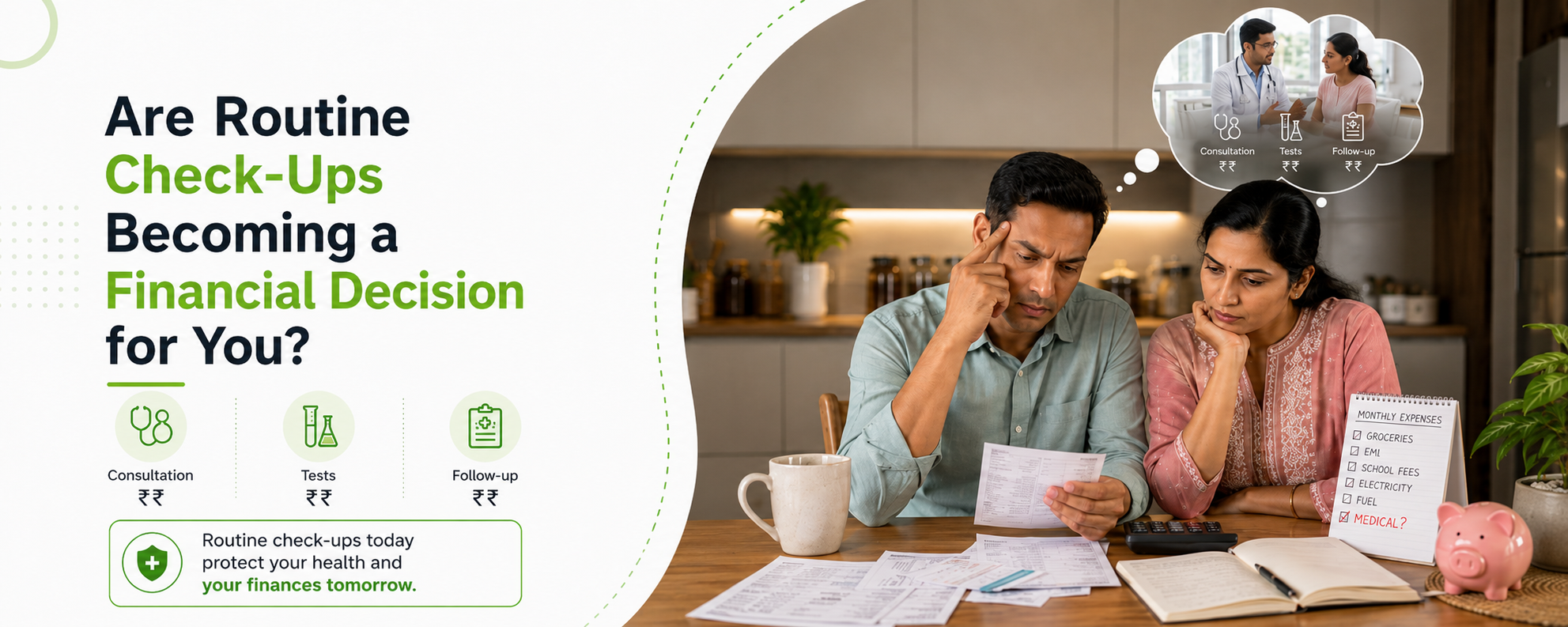
A single consultation might cost a few hundred rupees. A quick diagnostic test might cost a little more. On its own, neither feels significant. But across a year, a family of four typically deals with several of these situations — colds, allergies, minor infections, routine check-ups, a child’s vaccination follow-up, or a parent’s periodic blood pressure test.
Consequently, the real cost isn’t in any one visit. It’s in how often these visits happen and how rarely anyone accounts for them in advance. Add up ten or twelve such visits across a year, along with the tests and medicines that come with them, and the number often surprises people when they finally sit down and calculate it.
What This Actually Looks Like Over a Year
Consider a fairly ordinary household. A child catches two seasonal colds and one stomach infection. A parent needs a routine blood test and two follow-up consultations for a minor skin condition. Another family member needs a one-time visit for a sprained ankle.
None of these feel like emergencies individually. Together, though, they might easily add up to eight or nine separate doctor visits, a handful of diagnostic tests, and several rounds of medicine — all paid for out of pocket, with no support from a typical hospitalisation-only policy. This is the pattern that quietly strains monthly budgets, even in households that consider themselves financially disciplined.
How One Small Health Problem Can Snowball
Without a plan in place, a fairly predictable pattern tends to unfold:
- The family delays a doctor visit to avoid an unplanned expense that week
- The condition worsens slightly, so it needs a second visit or extra medicine
- A recommended test gets skipped to save money, which delays a proper diagnosis
- The final bill ends up higher than it would have been with early treatment
As a result, what started as a small health problem often turns into a bigger, more expensive one — not because the illness was serious, but because the response to it was delayed. This delay-driven cost increase is one of the most overlooked sources of household financial stress in India today.

Planning for the Expenses You Actually Face
A workable health budget doesn’t need to be complicated. Instead, it just needs to reflect what your family genuinely uses, rather than what you hope to avoid.
A few steps make this easier:
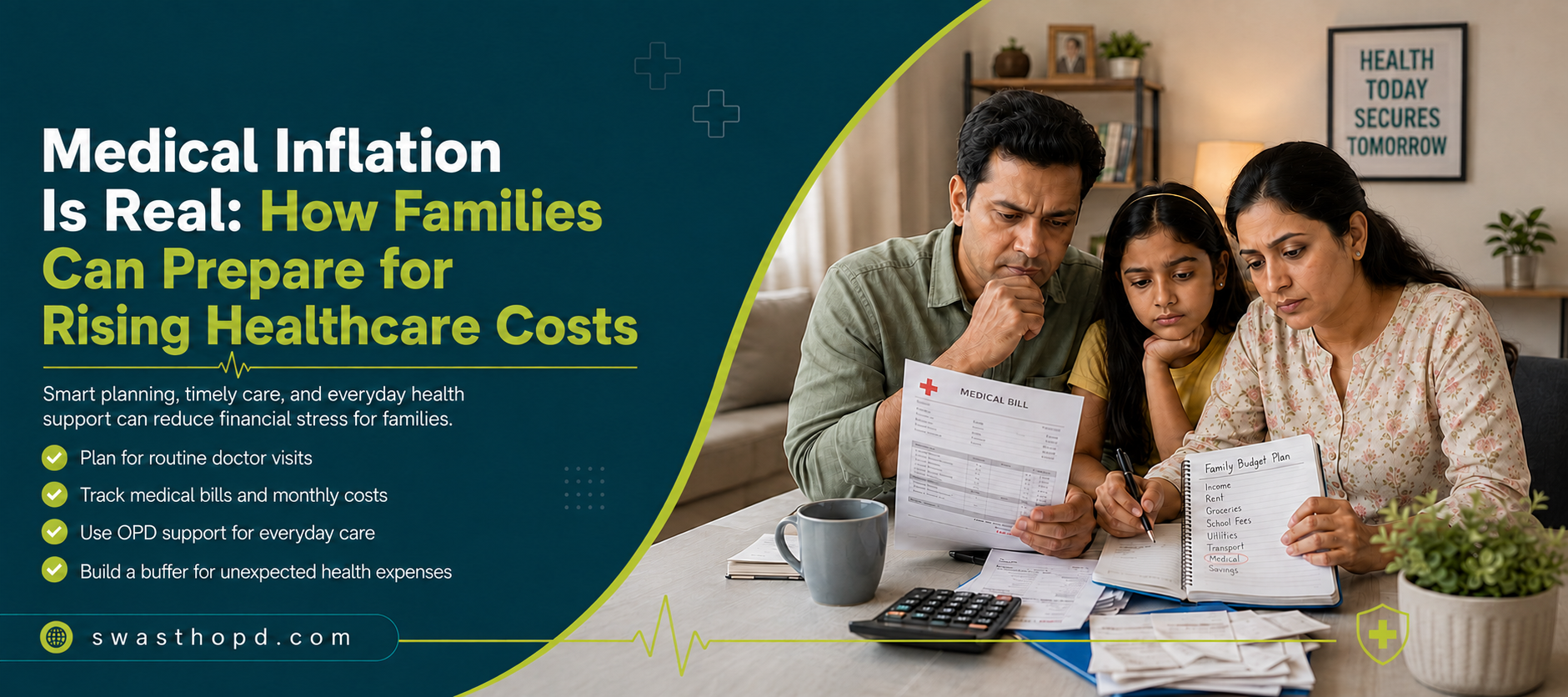
- Review the last 6–12 months of doctor visits, tests, and medicine costs to find a realistic average
- Set aside a fixed amount each month specifically for routine, OPD-type care
- Prioritise prevention wherever possible — early action almost always costs less than delayed treatment, as this guide on taking action before a health emergency explains well
- Keep a small, separate buffer for minor issues, distinct from your emergency hospitalisation fund
- Revisit this budget every few months, since family healthcare needs shift with age, seasons, and life changes
Once this structure exists, healthcare stops feeling like a surprise and starts feeling like something already planned for.
Where Most Health Insurance Leaves a Gap
Traditional health insurance generally protects against hospitalisation, not the routine expenses families face far more regularly. So, the everyday consultations, tests, and medicines that come with a typical small health problem usually receive no support at all.
That’s exactly why more people now look for health insurance that includes OPD coverage rather than hospitalisation-only plans. Without it, families end up paying repeatedly for the exact expenses that occur most often, while their policy sits unused until something more serious happens. In many cases, people only realise this gap exists after they’ve already paid several unreimbursed bills — often right when they can least afford the surprise.
A Few Common Myths Worth Clearing Up
Many families avoid planning for routine healthcare costs because of a few common misconceptions:
- “My hospitalisation policy already covers this” — In most cases, it doesn’t. OPD care and hospitalisation cover are usually separate benefits entirely.
- “These costs are too small to plan for” — Individually, yes. Added up over a year, they rarely are.
- “Budgeting for this means expecting to get sick” — In reality, it means being prepared for something that statistically will happen anyway, just like budgeting for vehicle maintenance doesn’t mean expecting a breakdown.
Clearing up these assumptions is often the first step toward taking routine healthcare costs seriously.
Making Everyday Care Feel Routine, Not Risky
Ultimately, the goal isn’t to prevent every minor illness — that’s simply not realistic. Instead, the goal is to make these costs predictable enough that they stop disrupting the rest of the month’s finances.
When families plan ahead for routine care, they tend to seek treatment sooner, follow through on recommended tests, and sidestep the delayed-treatment spiral that costs more down the line. In short, a little structure here creates a lot of peace of mind — and reinforces why health truly is wealth in the most practical sense.
How SwasthOPD Can Help
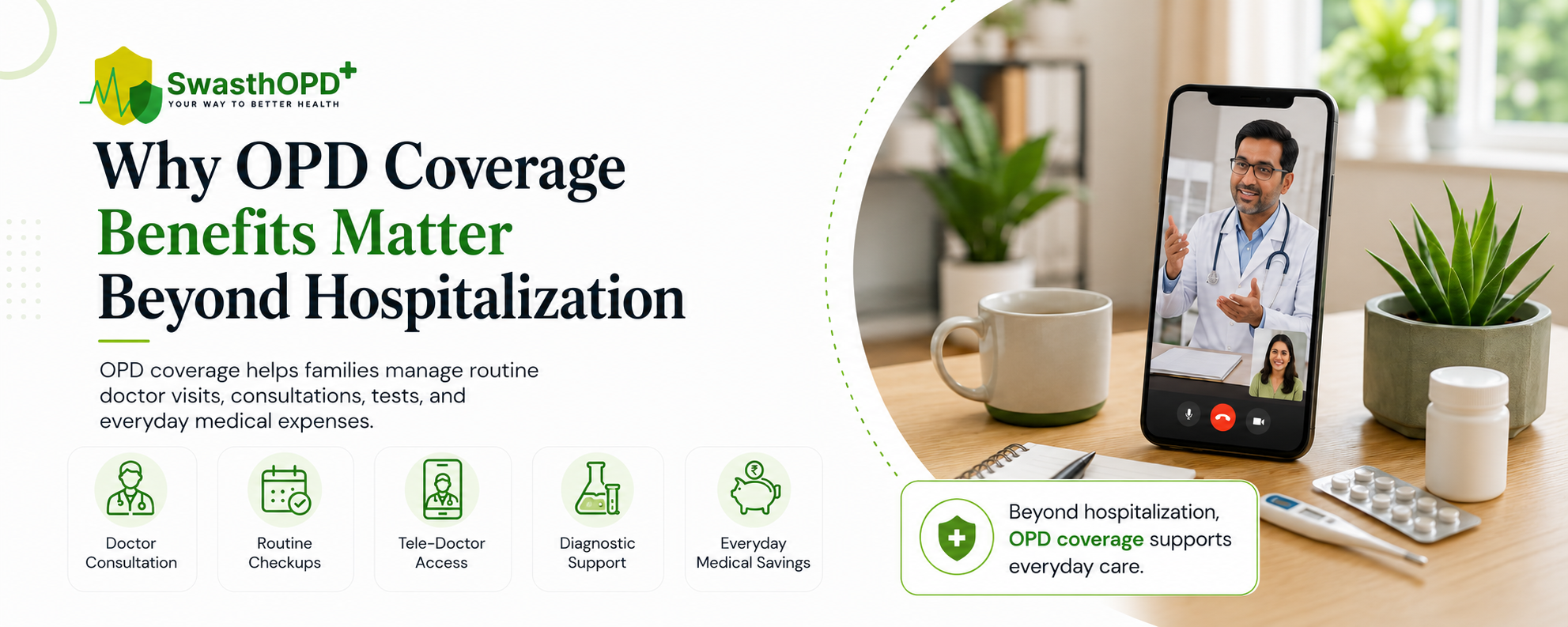
SwasthOPD specifically addresses the gap traditional insurance leaves behind. It covers tele-consultations, in-person doctor visits, discounted diagnostics, and medicine savings — the everyday expenses tied to any small health problem — alongside cashless hospitalisation cover for larger emergencies.
So, instead of treating every minor illness as an unplanned expense, families can check our health plans and build a monthly budget that holds steady, no matter what the month brings.