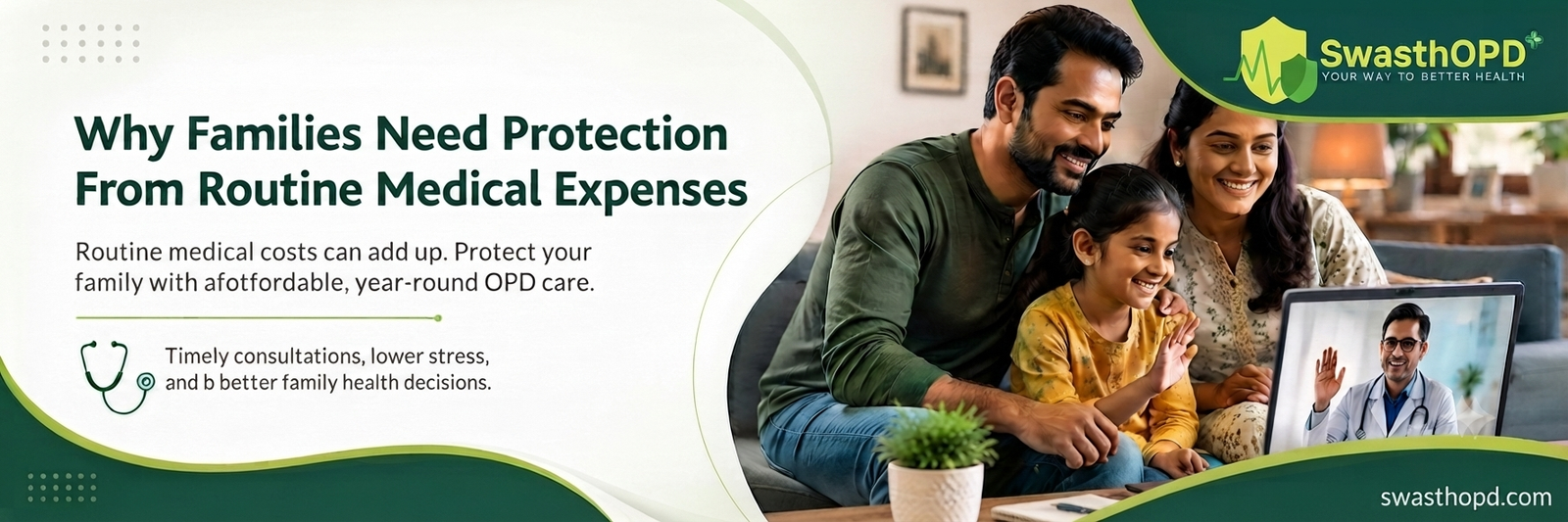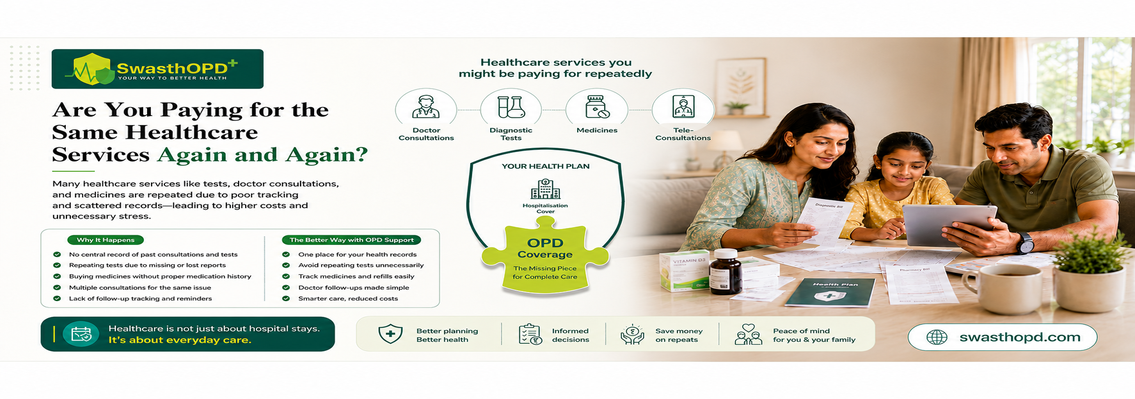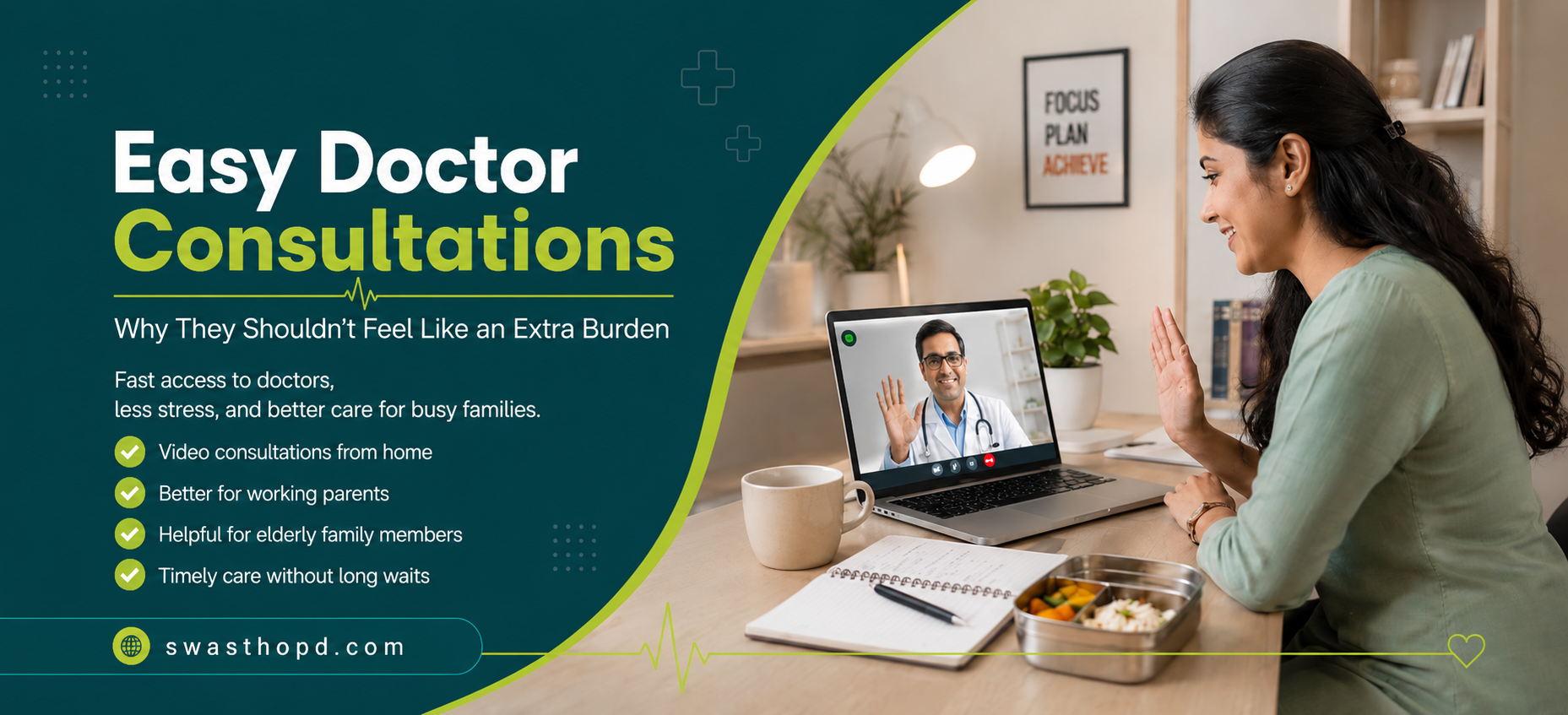
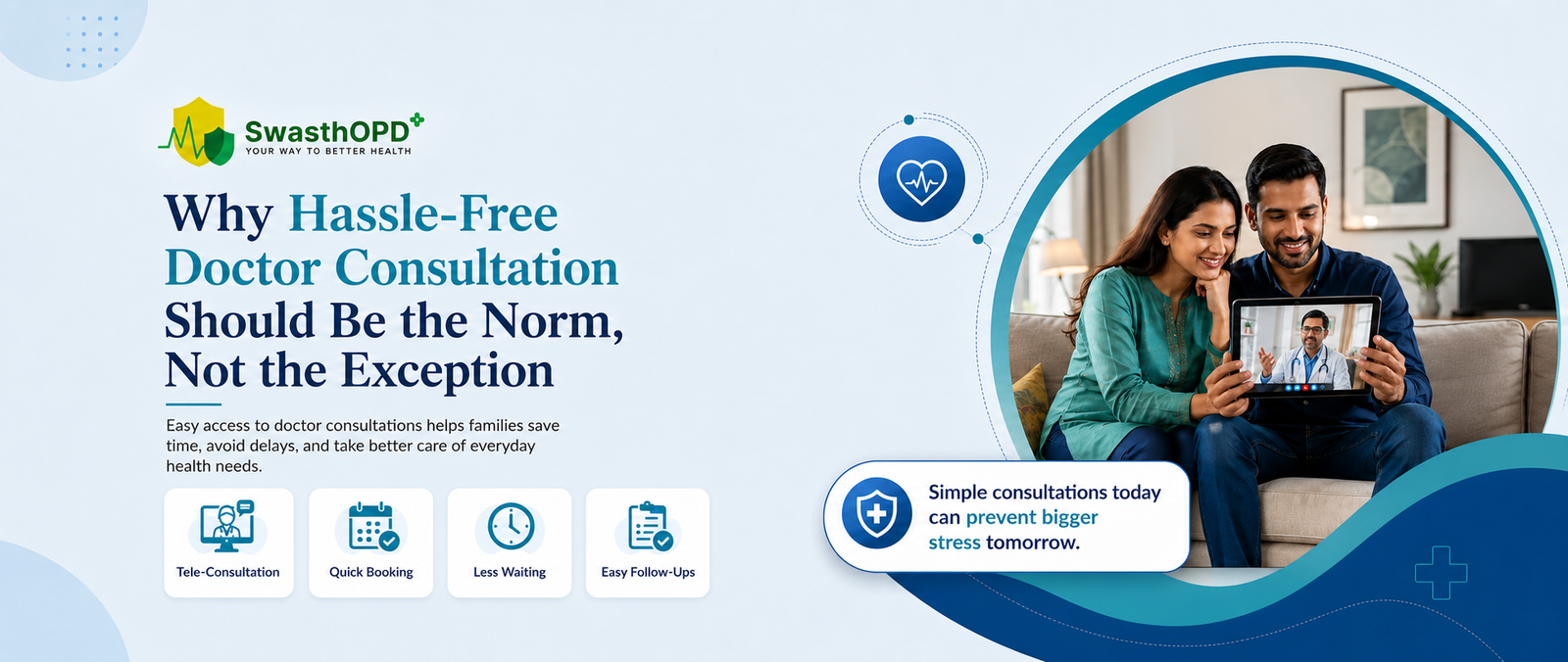
Most families buy a health plan thinking it covers everything. Then a fever hits, or a child needs a quick check-up, and the truth comes out — the plan only pays when someone is admitted to a hospital. This is where OPD doctor visits being covered makes a real difference. Everyday doctor visits, blood tests, and medicines are left completely out of the picture. Everyday OPD doctor visits keep small issues from becoming emergencies…
This gap is more common than people realise, and it quietly drains household budgets month after month.
Why Health Plans Lean Toward Big Bills
Traditional health insurance was built around one idea: protect people from financial shock during a major illness or surgery. That’s still important. But it means routine care — the kind families actually use most often — usually gets no support at all.
Think about how often your family visits a doctor in a year compared to how often someone gets hospitalised. For most households, it’s not even close. A child’s seasonal cough, a parent’s blood pressure check, a skin allergy, a stomach infection — these visits happen regularly, and they add up in cost even though each one feels “small.”
The Real Cost of Ignoring Routine Care
When a plan only pays for hospitalisation, families end up paying out of pocket for:
- Doctor consultation fees, in-person or online
- Diagnostic tests like blood work or scans
- Prescribed medicines from the pharmacy
- Follow-up visits for ongoing conditions
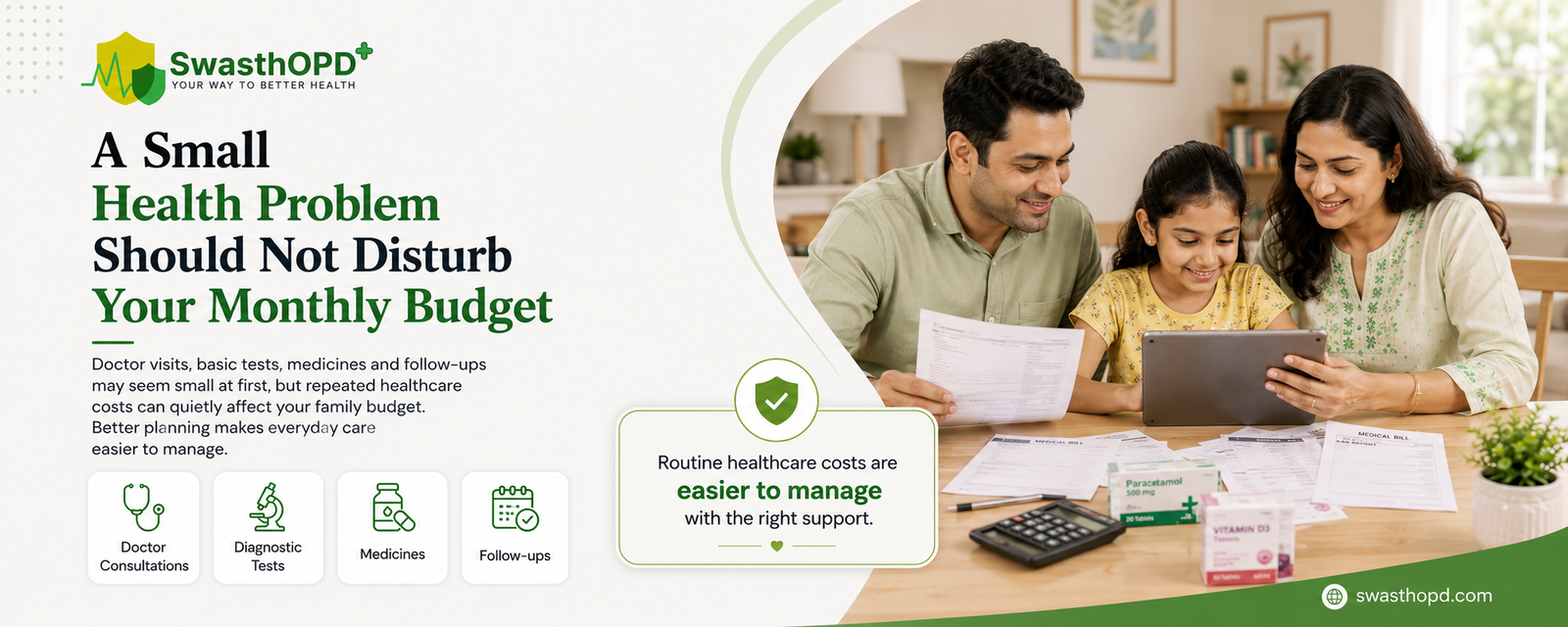
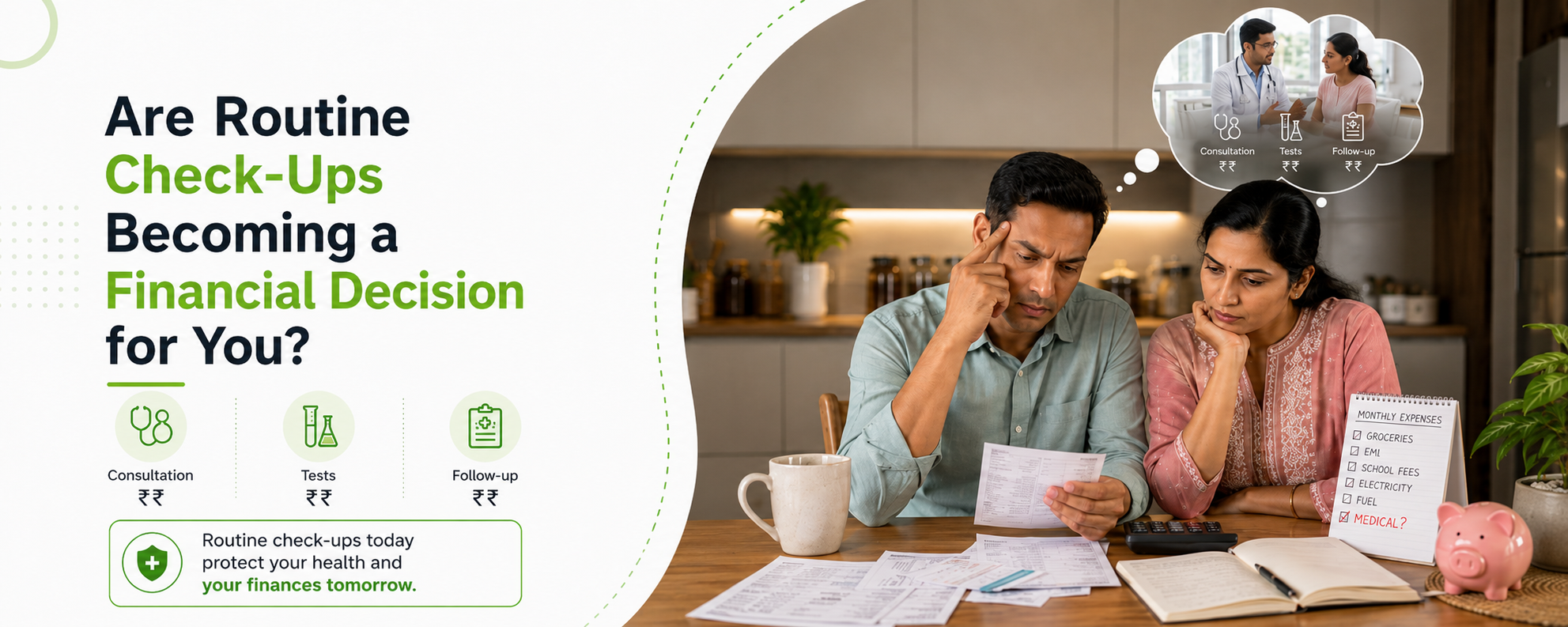
Over a year, these expenses often cross what people expect. A single consultation might feel manageable, but multiply it across a family of four, add in a couple of diagnostic tests, and the monthly total starts to look a lot like an unplanned bill.
There’s also a behavioural cost. When every doctor visit means an unreimbursed expense, people delay care. A minor issue gets ignored until it becomes a bigger one — and that’s exactly when hospitalisation-only cover kicks in, at a much higher cost to both health and money.

What OPD Coverage Actually Changes
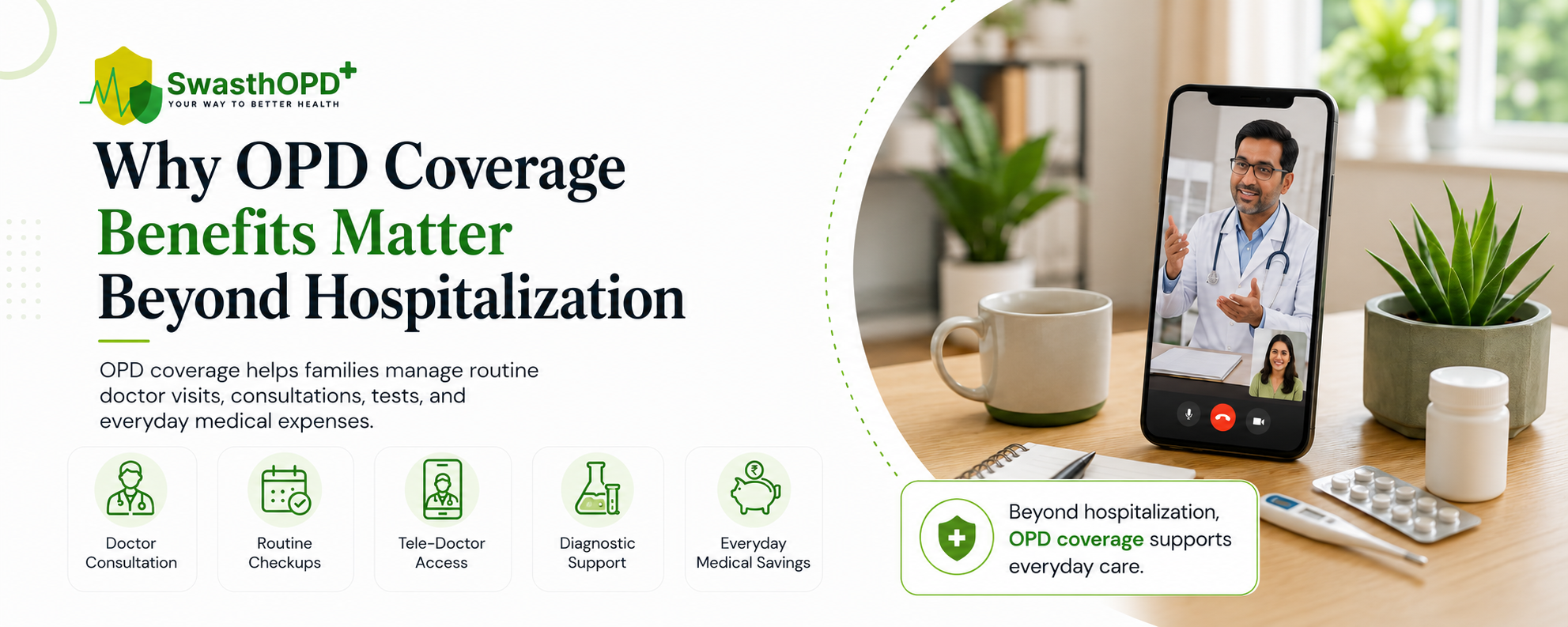
This is where OPD doctor visits being covered makes a real difference. OPD, or Out-Patient Department care, includes everything that doesn’t need a hospital bed — consultations, diagnostics, minor procedures, and medicines. When a plan includes this, families stop hesitating before booking a check-up.
Instead of asking “is this worth the expense,” people simply go get checked. Early detection becomes normal instead of accidental. Preventive habits — an annual full body checkup, a timely consultation for symptoms that seem minor — become part of routine life rather than something skipped to save money.
How to Check What Your Current Plan Covers
Before assuming your plan has you covered, it helps to actually read the fine print:
- Does it mention “out-patient” or “OPD” benefits, or only “hospitalisation” and “in-patient” care?
- Are tele-consultations included, or only in-person hospital visits?
- Is there a cap on diagnostic test reimbursement, and how easy is the claim process?
- Do medicines from routine prescriptions qualify for any discount or reimbursement?
Many people discover their plan only supports cashless hospitalisation and nothing for the doctor visits that happen far more frequently. If you’ve faced a rejected claim or unclear terms before, it’s also worth understanding the common reasons OPD claims get rejected so you know what to watch for.
Building a More Balanced Approach to Family Health
A well-rounded approach doesn’t mean choosing between OPD support and hospitalisation cover — it means having both. Everyday OPD doctor visits keep small issues from becoming emergencies, while hospitalisation cover protects against the rare but serious event.
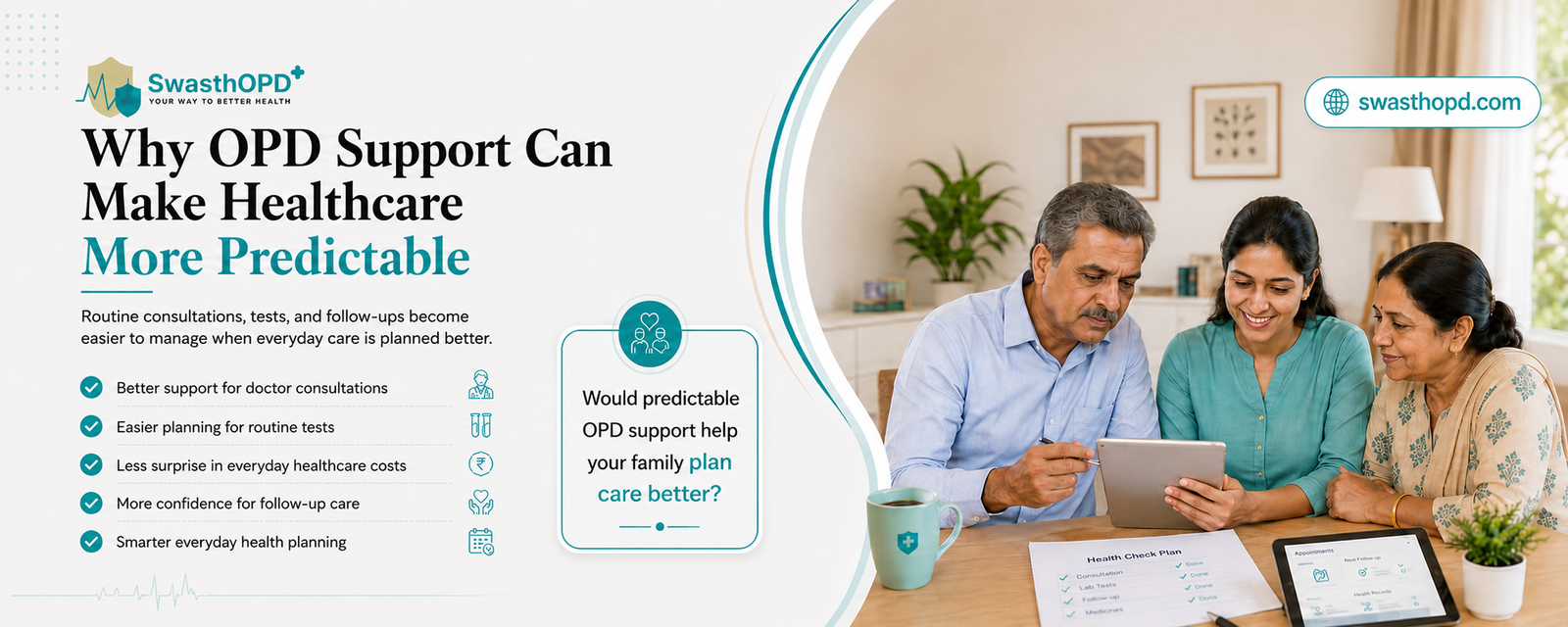
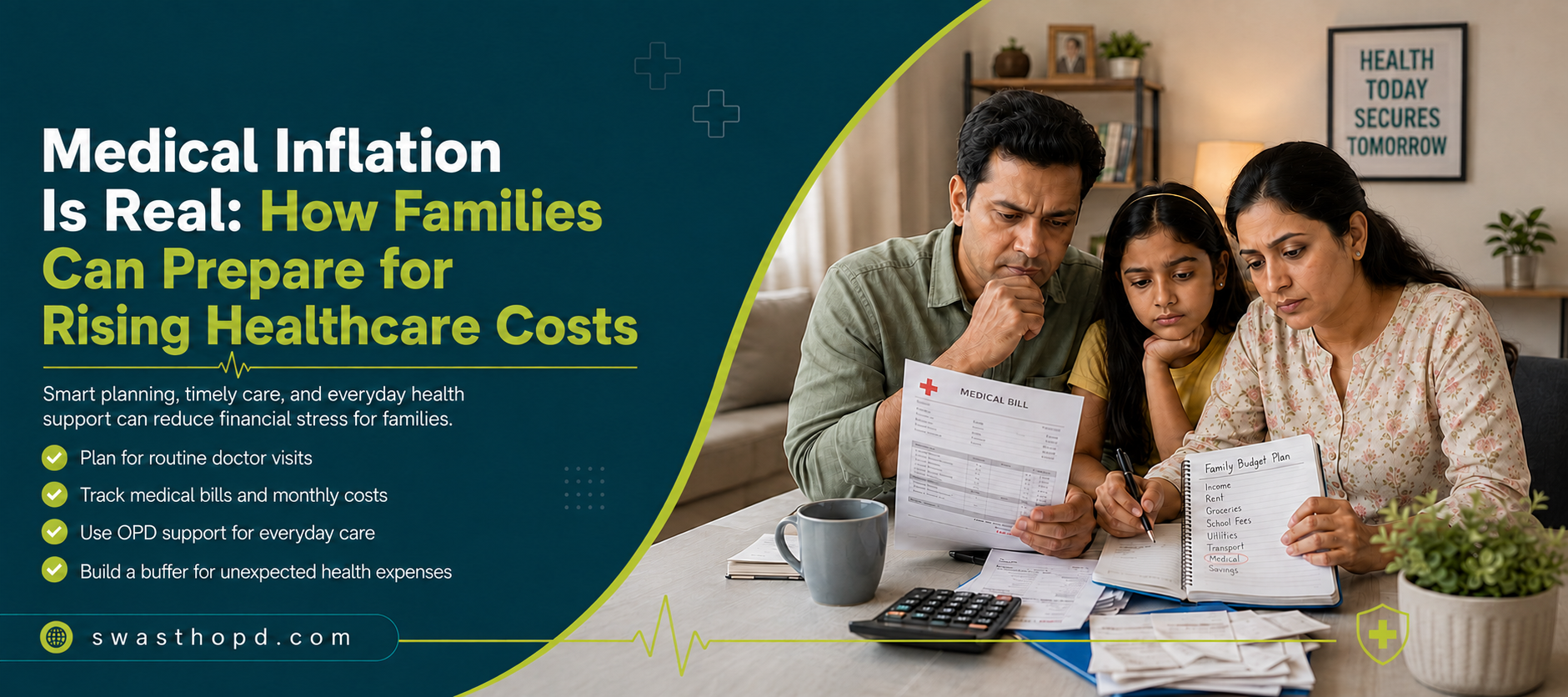
This is really about family health planning done properly: budgeting for the care your family actually uses, not just the care you hope you’ll never need. Preventive check-ups, quick consultations, and timely diagnostics should feel routine, not like a financial decision every time.
How SwasthOPD Can Help
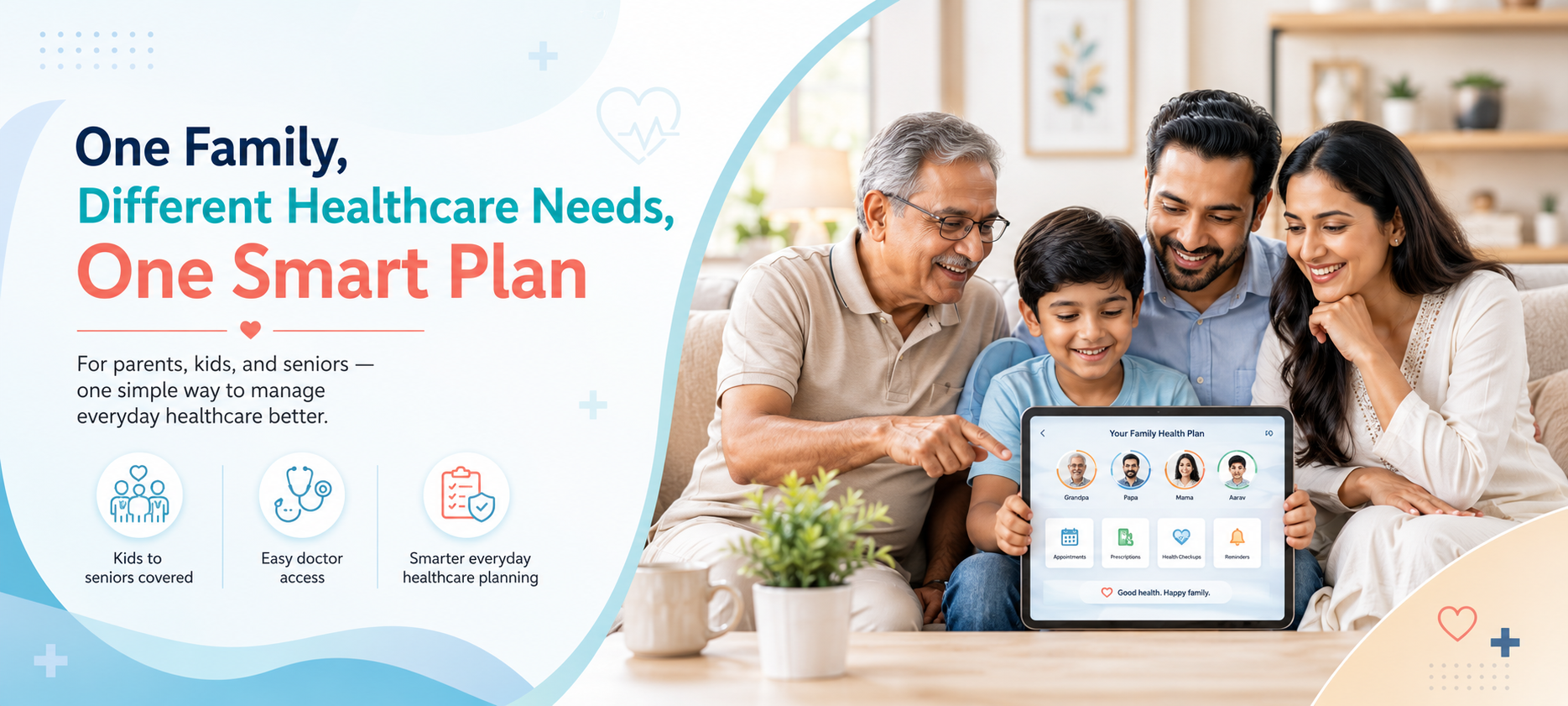
SwasthOPD is built around the gap most traditional plans leave open. It brings tele-consultations, in-person GP visits, discounted diagnostics, and medicine savings into one simple plan — alongside cashless hospitalisation cover for the bigger moments. Families don’t have to choose between affording a doctor visit today and being protected for a hospital stay tomorrow.
If your current plan only steps in when things get serious, it may be time to explore SwasthOPD plans and see what everyday coverage could look like for your family.