
Nobody plans for a hospital bill. It just shows up, usually right when you’re least prepared for it. Here’s the part most families miss: a smaller bill, or no bill at all, is often possible. Catching a problem a few months earlier makes that difference. Regular health checkups exist for exactly this reason, to catch small issues before they turn into expensive ones.
Why Small Symptoms Turn Into Big Bills
Most serious health conditions don’t appear overnight. High blood pressure, borderline sugar levels, and thyroid imbalances build up quietly over months or years. Even early-stage kidney or liver issues follow the same pattern. Symptoms usually stay hidden until they’re impossible to ignore. By then, the treatment often takes longer, costs more, and gets more complicated.
A simple blood test or a routine consultation costs a fraction of a hospital admission. Yet many families skip these tests year after year. It’s rarely about not caring. Nothing feels urgent until something actually hurts. A missed early sign can change the outcome completely. It can mean the difference between a diet change and a lifetime of daily medication. This is the entire logic behind regular health checkups: catch the problem while it’s still cheap and simple to treat.
What a Yearly Checkup Actually Catches
A basic annual check-up usually covers blood pressure, blood sugar, cholesterol, and kidney and liver function, along with a general physical exam. Doctors often recommend a few targeted additions for families with a history of specific conditions. That’s exactly the kind of protection regular health checkups are designed to offer.
These simple tests catch a surprising number of issues early:
- Borderline diabetes, manageable with diet changes instead of medication
- Early hypertension, treatable before it affects the heart or kidneys
- Vitamin deficiencies causing fatigue that’s often mistaken for stress
- Thyroid imbalances that quietly affect weight, energy, and mood
None of these need emergency care when caught early. Left ignored long enough, any of them can. Catching things on a routine visit instead of during a crisis makes the treatment simpler and shorter. It’s also considerably kinder to the family budget.
The Real Cost Comparison Families Rarely Make
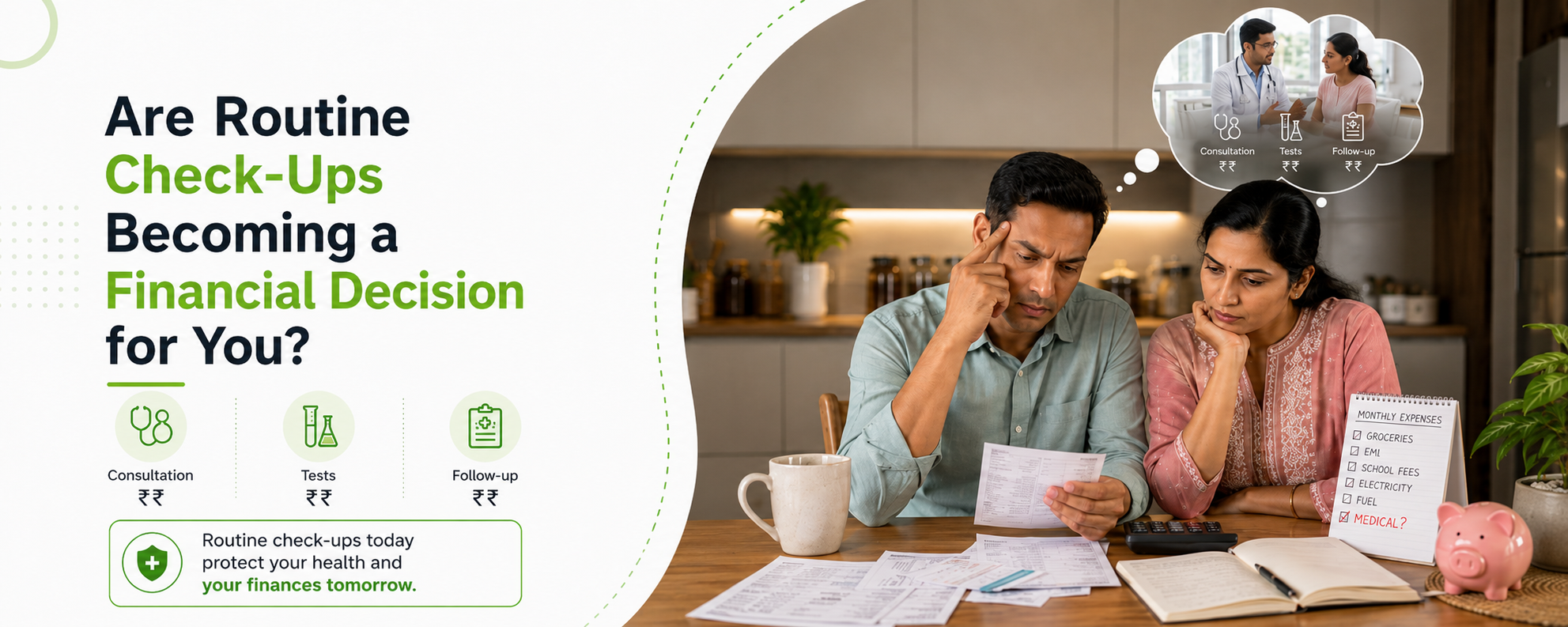
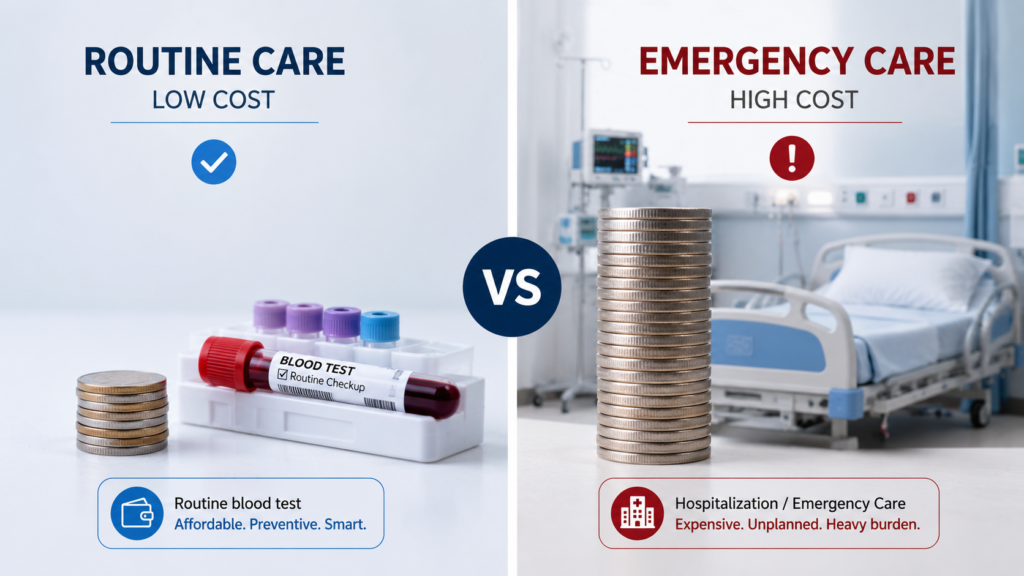
A full body check-up typically costs a few thousand rupees once a year. An unplanned hospital stay for a condition nobody managed can run into lakhs. That figure doesn’t even count lost work days, travel, or the stress it puts on the rest of the family. Recovery time adds its own cost too, one that rarely shows up on any bill. Put the two numbers side by side, and regular health checkups stop looking optional. They start looking like the cheaper choice by a wide margin.
This is also where healthcare cost management becomes less about cutting corners. It becomes more about spending in the right place, on prevention, rather than on emergencies you could have avoided.
Why Most People Still Skip Their Yearly Checkup
The reasons are familiar: no time, no visible symptoms, or a simple assumption that “I feel fine, so I must be fine.” Cost is another factor too, especially when a check-up feels like an extra expense rather than something a plan already covers. Skipping regular health checkups doesn’t remove the risk, it just delays when the bill eventually arrives.
This is exactly why cashless OPD benefits matter so much. When a plan already includes diagnostics and consultations, the checkup stops competing with the month’s other expenses. The usual excuse to skip it quietly disappears.
Building the Habit Into Your Family’s Routine
Pick one month a year, a birthday month works well, and treat it as your family’s checkup month. Book appointments for every adult in the household together. That way, it becomes a shared routine instead of something each person has to remember alone. Pair this with a broader healthcare planning approach, one that also covers ageing parents and growing children. It’s far easier to stick to year after year this way.
Regular health checkups work best as a fixed part of the calendar, not a one-off event. Treat it the way you’d treat a car service or a school fee payment. Set a reminder on the same date every year, so the habit doesn’t quietly slip once life gets busy.
How SwasthOPD Can Help
SwasthOPD makes it easier to actually follow through on this habit. A single plan covers discounted diagnostics, cashless OPD consultations, and tele-consultations. A yearly checkup stops feeling like an added cost and becomes a simple, covered routine. Families no longer have to choose between a health check-up and other monthly expenses.
If it’s been more than a year since your last full checkup, take a look at how you can explore SwasthOPD plans. Build prevention into your routine now, before an unexpected bill forces the decision for you.