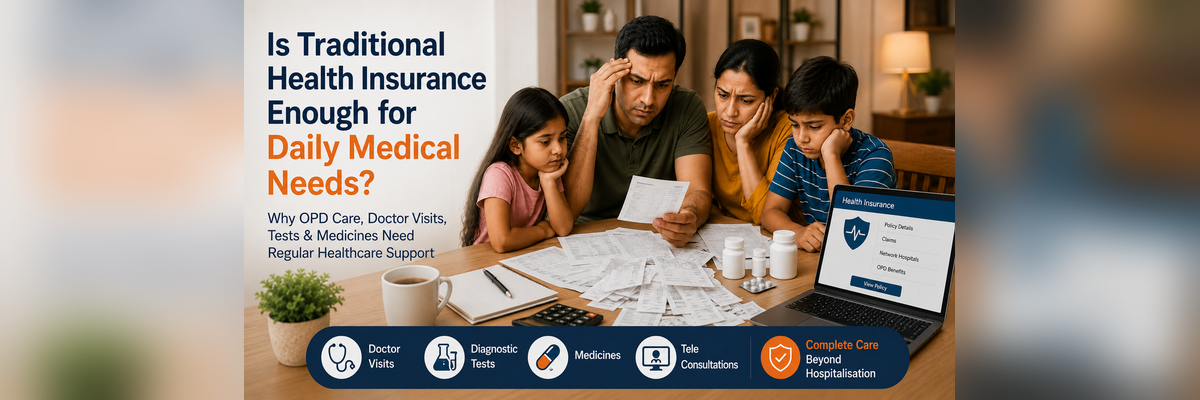
Most people feel covered the moment they buy a health insurance policy. Sum insured looks healthy, hospitalisation is taken care of, and the premium receipt goes into a folder — job done. But ask the same person about their last five doctor visits, and there’s a good chance none of those bills were covered by that policy at all. That gap has a name: OPD health coverage, and it’s the piece most Indian health plans quietly leave out.
What Regular Health Insurance Actually Covers
Standard health insurance is built for the big, unpredictable event — a surgery, an accident, a hospital admission lasting more than 24 hours. That’s important, no doubt. But it’s also rare. Most families go years without a hospitalisation claim, while dealing with dozens of smaller medical expenses every single year.
Here’s what typically falls outside a standard policy:
- Doctor consultations for fever, infections, or general check-ups
- Diagnostic tests like blood work, X-rays, or scans done outside a hospital stay
- Dental visits and minor eye care
- Regular medicines for ongoing conditions like diabetes or thyroid
If none of this sounds covered under your current plan, you’re not alone — and this is exactly the blind spot worth fixing.
Why This Gap Costs More Than People Realise
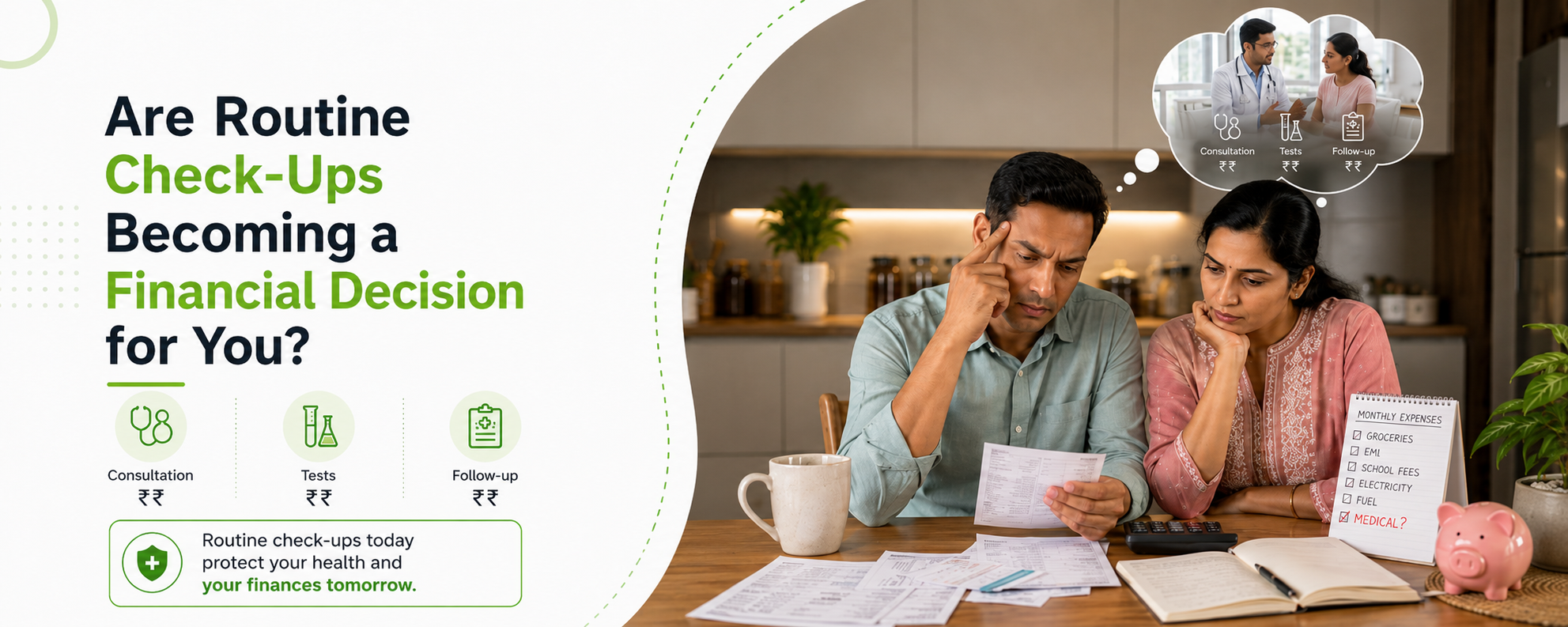
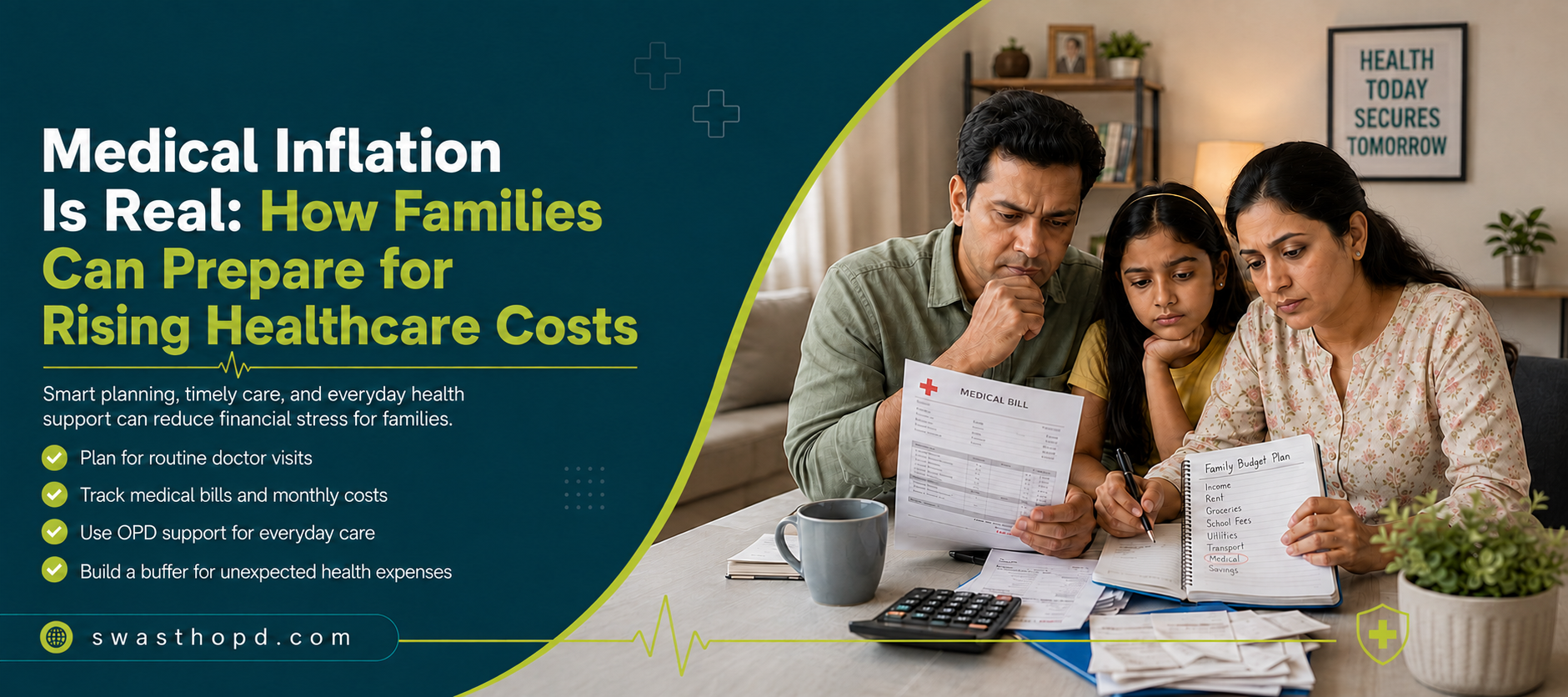
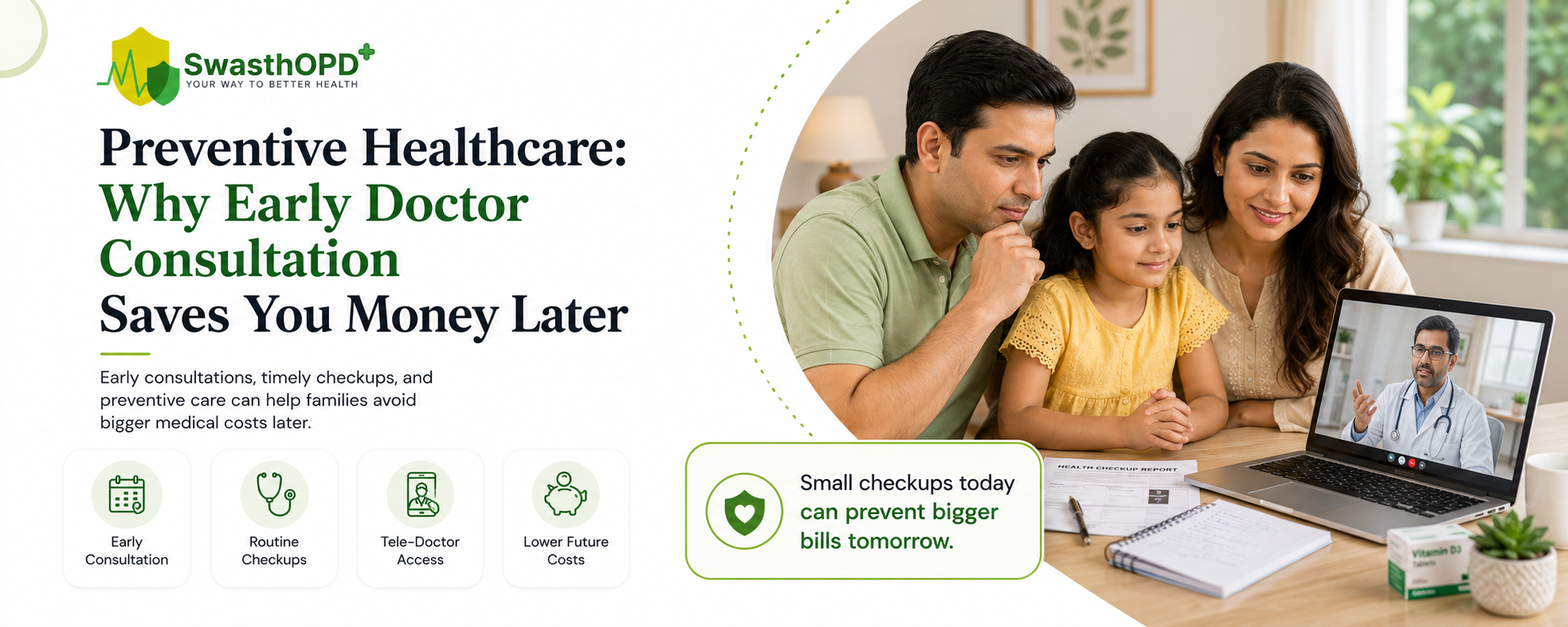
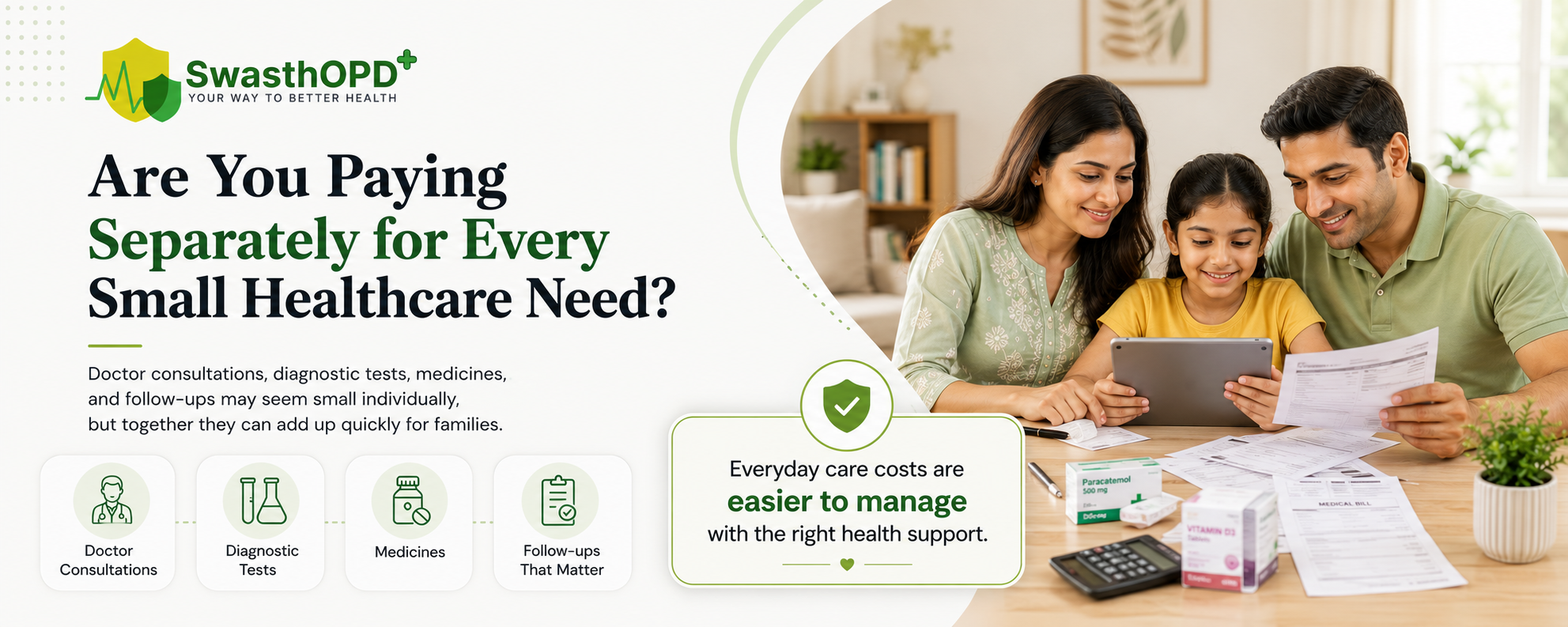
Small expenses feel manageable individually, so they rarely get planned for. A ₹600 consultation here, a ₹1,200 blood panel there, a monthly medicine strip — none of it looks alarming on its own. Add it up over twelve months, though, and many families spend more on these everyday visits than they ever claim from their actual insurance policy.
This is where OPD health coverage earns its place. It’s designed specifically for this recurring, predictable spend — the stuff that happens often enough to matter, but rarely gets budgeted for properly. For a deeper look at how these costs quietly build up, this piece on healthcare cost management breaks it down well.

How OPD Coverage Fits Alongside Your Existing Policy
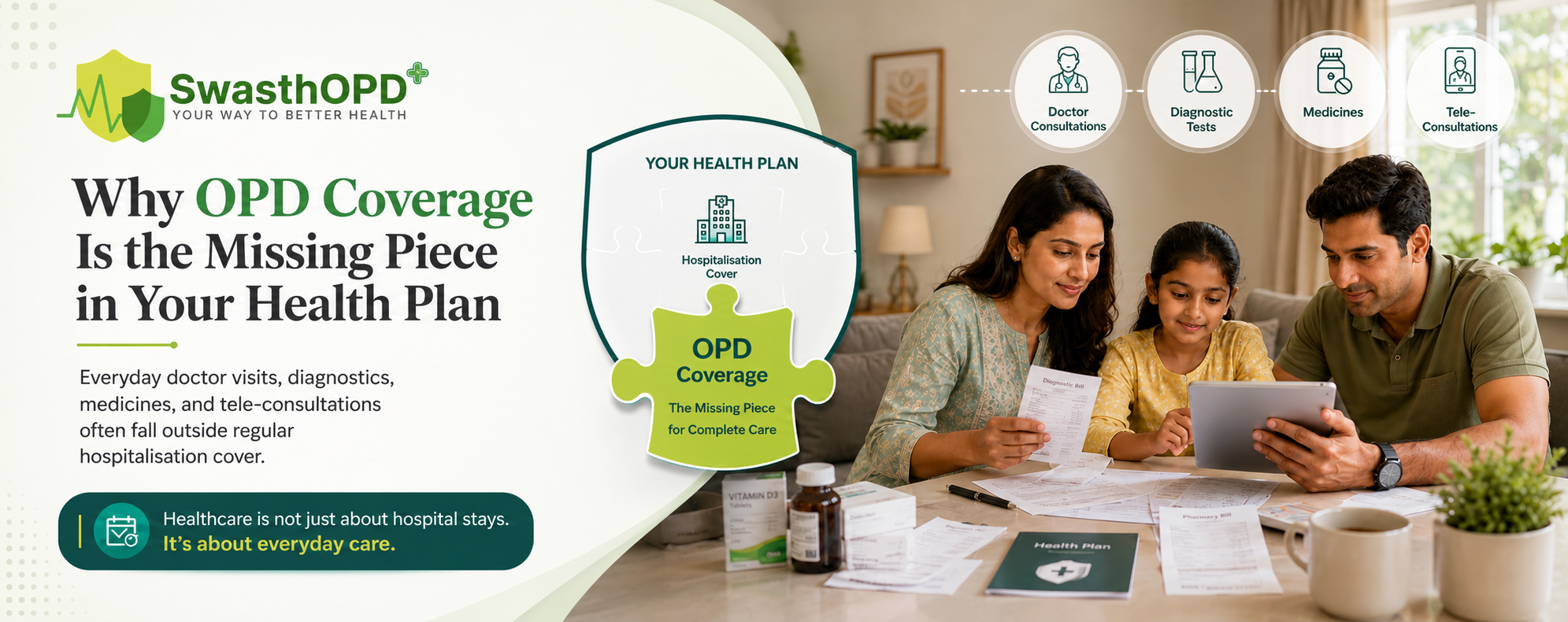
A common misconception is that OPD coverage replaces regular insurance. It doesn’t — it complements it. Think of your hospitalisation policy as protection against the rare, major event, and OPD coverage as the layer that handles the frequent, smaller stuff in between.
Together, they look something like this:
- Hospitalisation insurance — covers surgeries, admissions, major treatments
- OPD health coverage — covers consultations, diagnostics, medicines, minor procedures
- Preventive add-ons — covers annual check-ups and screenings before problems escalate
Families who rely only on the first layer often end up paying the second and third layers entirely out of pocket, year after year, without noticing the pattern. If claim rejections have been a frustration in the past, it’s worth reading about common reasons OPD claims get rejected so you know what to look for before signing up for a new plan.
Who Feels This Gap the Most
Some households feel the absence of OPD coverage more sharply than others:
- Families with young kids, who need frequent paediatric visits and vaccinations
- Households with elderly parents, who need regular monitoring, not just emergency care
- People managing chronic conditions, where medicines and tests are a monthly, not yearly, expense
If your household fits more than one of these categories, OPD coverage stops being optional and starts being the more-used part of your health plan. This ties closely into broader family health planning, especially when multiple generations are relying on the same household budget for care.
A Simple Way to Check If You Need It
Before assuming your current plan has you covered, try this: add up everything you spent on doctor visits, tests, and medicines last year that wasn’t reimbursed. If that number surprises you, OPD coverage isn’t a nice-to-have — it’s the missing piece your health plan needed all along.
How SwasthOPD Can Help
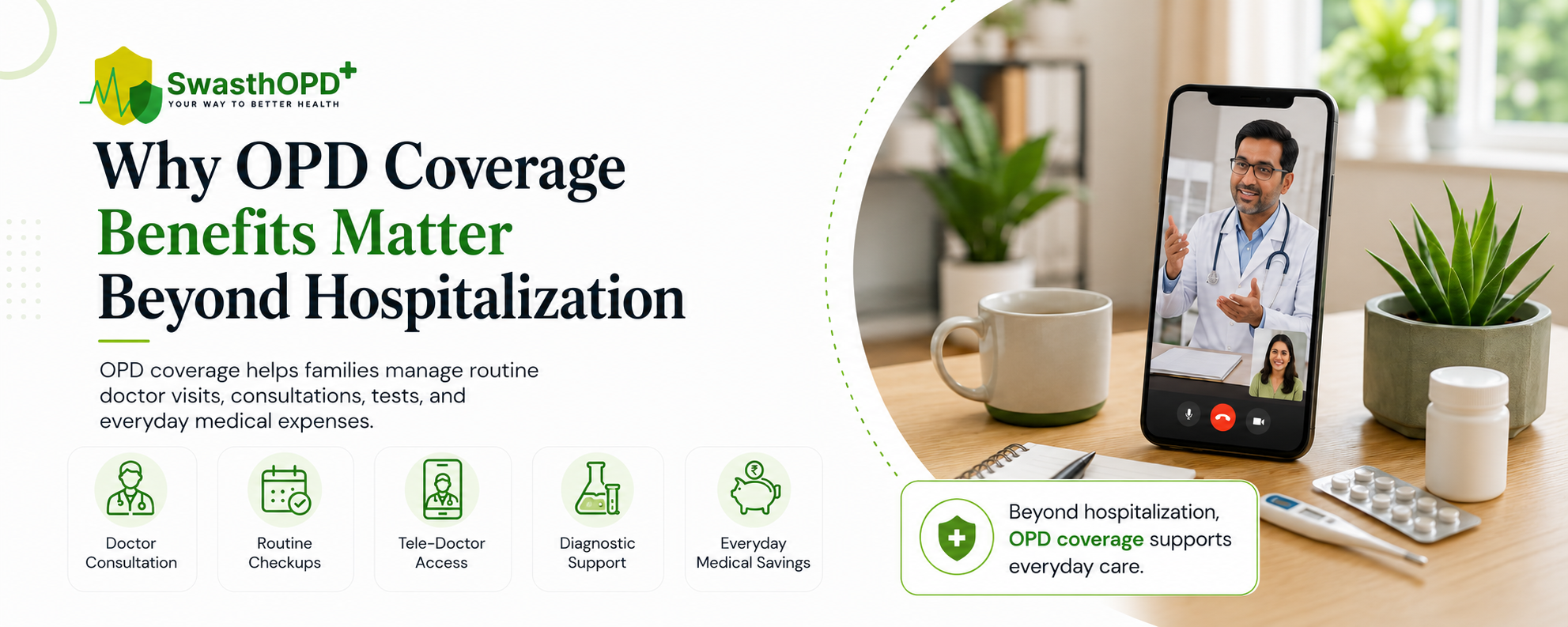
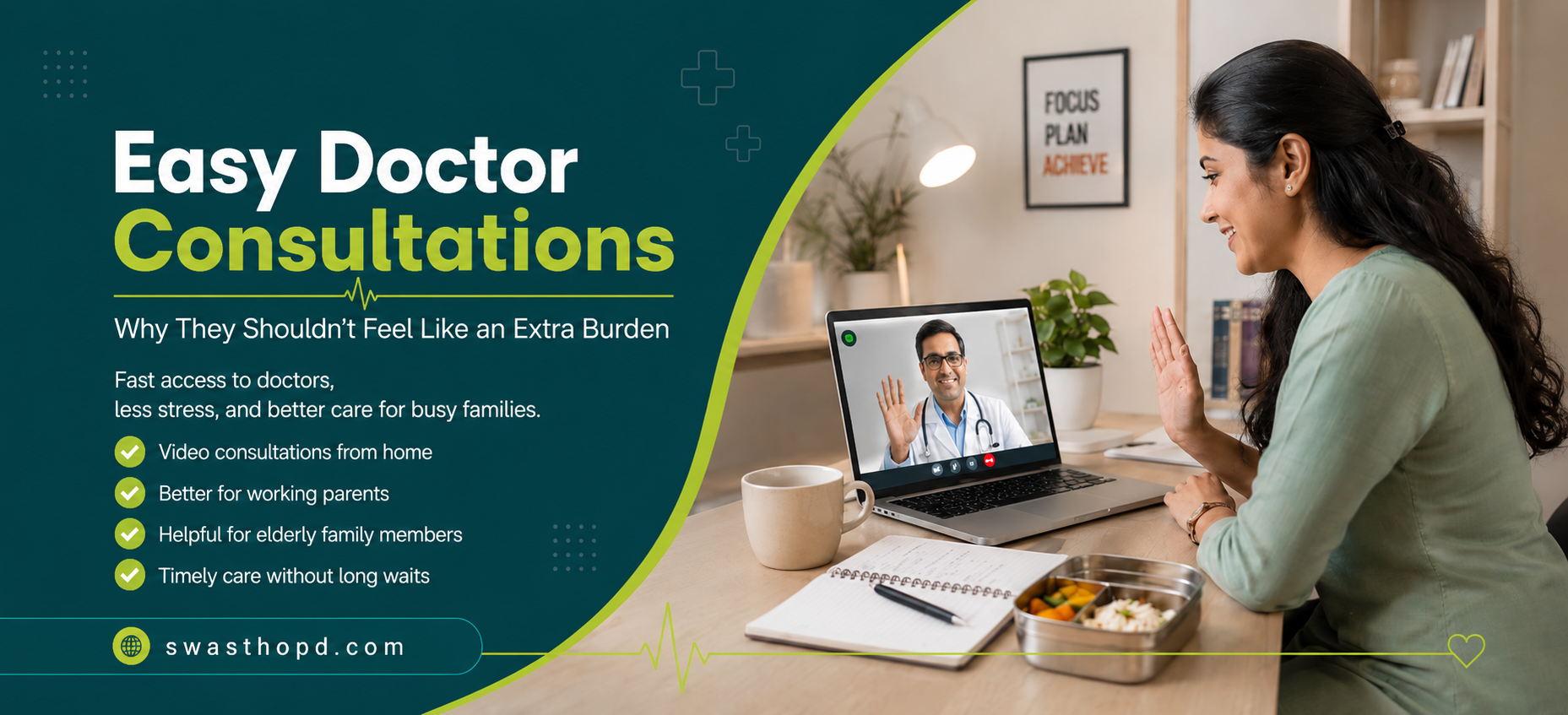
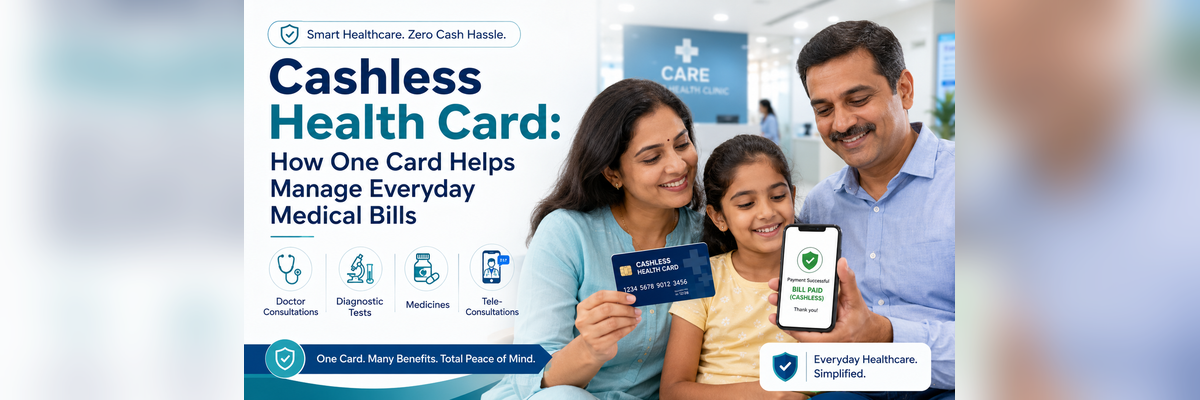
SwasthOPD was built specifically to close this gap. With SwasthOPD’s OPD health coverage, everyday doctor consultations, diagnostics, tele-consultations, and medicines are handled through one simple plan — no waiting on reimbursements, no separate tracking of small bills all year.
If your current insurance stops at hospitalisation, it’s worth checking out SwasthOPD’s health plans to see how OPD coverage can round out the picture.