Every family has one health insurance policy. But every member of that family has completely different health needs. Your father needs regular blood pressure checks. Your toddler needs frequent pediatrician visits. You probably just need an annual checkup and the occasional cold. A single, rigid policy rarely fits all of this well. This is exactly why more households now look for a family healthcare plan built around flexibility. Not a one-size-fits-all number.
Why One Policy Rarely Fits Everyone
Most traditional health insurance is designed around a single idea. It protects against hospitalization. That works fine on paper. In real life, though, each family member uses healthcare very differently.
Kids need frequent, small visits. Vaccinations, seasonal infections, minor injuries add up fast. Working adults mostly need occasional consultations and preventive screenings. Elderly parents often need the most frequent care — regular monitoring, medicines, and specialist visits. A generic family healthcare plan that only covers hospitalization misses almost all of this everyday usage.
What Each Family Member Actually Needs
Think about a typical household of four. Each person has a distinct healthcare pattern:
- Young children: frequent pediatric visits, vaccinations, minor illnesses
- Working adults: annual checkups, occasional consultations, dental care
- Elderly parents: regular monitoring, chronic condition management, diagnostics
- Everyone: unplanned doctor visits and prescription medicines through the year
Add these up across a year. The household’s real healthcare usage looks nothing like a single hospitalization number. A smart family healthcare plan accounts for this mix. It doesn’t assume every member behaves the same way.

The Problem With Treating Everyone the Same
Many families buy one large sum-insured policy. They assume it covers everything. It doesn’t. Hospitalization cover sits unused most years. Meanwhile, everyday costs — doctor visits, tests, medicines — get paid entirely out of pocket. Over a year, these small costs across different family members add up to a real number.
This mismatch is exactly where a flexible family healthcare plan makes the biggest difference. Instead of one rigid structure, it adapts to how each member actually uses healthcare through the year. A plan built this way stops feeling like dead weight for most of the family, most of the time.
Real Costs Add Up Differently for Each Member
Consider what a year actually looks like for one household. The father visits a cardiologist twice a year for routine monitoring. The mother gets an annual full-body checkup and the occasional dental visit. Their daughter needs seasonal flu treatment and a school-mandated vaccination. Each of these expenses is small on its own. Together, they form a pattern that a rigid, hospitalization-only policy simply doesn’t reach.
A well-structured family healthcare plan recognizes this pattern early. It builds coverage around the visits that actually happen, not just the emergencies that might.
Flexibility Doesn’t Have to Mean Complexity
Some families avoid restructuring their coverage because it sounds complicated. In practice, a well-designed family healthcare plan simplifies things rather than adding to the confusion. Instead of tracking separate receipts for each member’s doctor visits, tests, and medicines, everything sits under one system.
This matters most during busy months. The father might have a follow-up appointment. The daughter needs a vaccination. The mother is due for her annual checkup — all within the same few weeks. A single flexible plan absorbs this naturally, instead of forcing the family to juggle multiple out-of-pocket payments at once.
What a Smart Family Healthcare Plan Should Include
A genuinely useful family healthcare plan covers more than just emergencies. It should include:
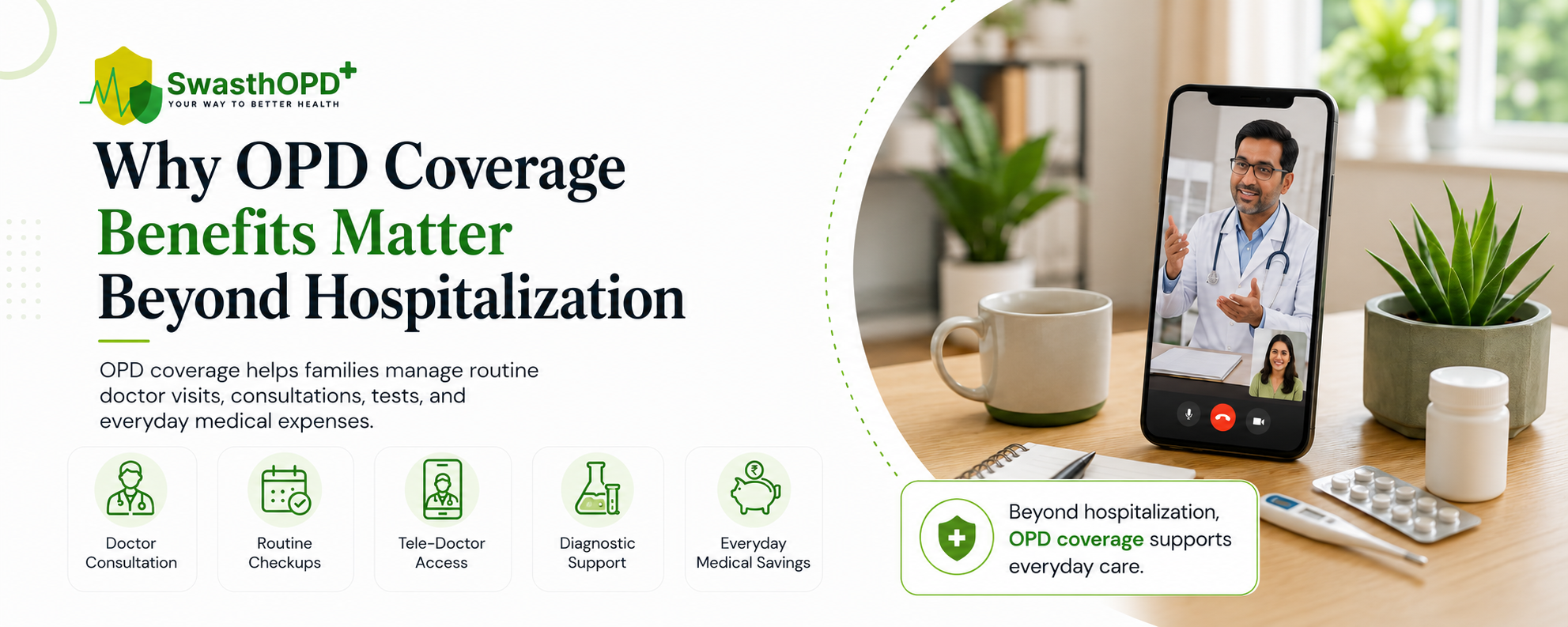
- OPD coverage for routine doctor visits and consultations
- Discounted or covered diagnostic tests for regular monitoring
- Medicine coverage, since prescriptions add up fast for elderly parents
- Tele-consultations for quick, low-effort access when someone falls sick
- Cashless hospitalization for the rare but serious cases
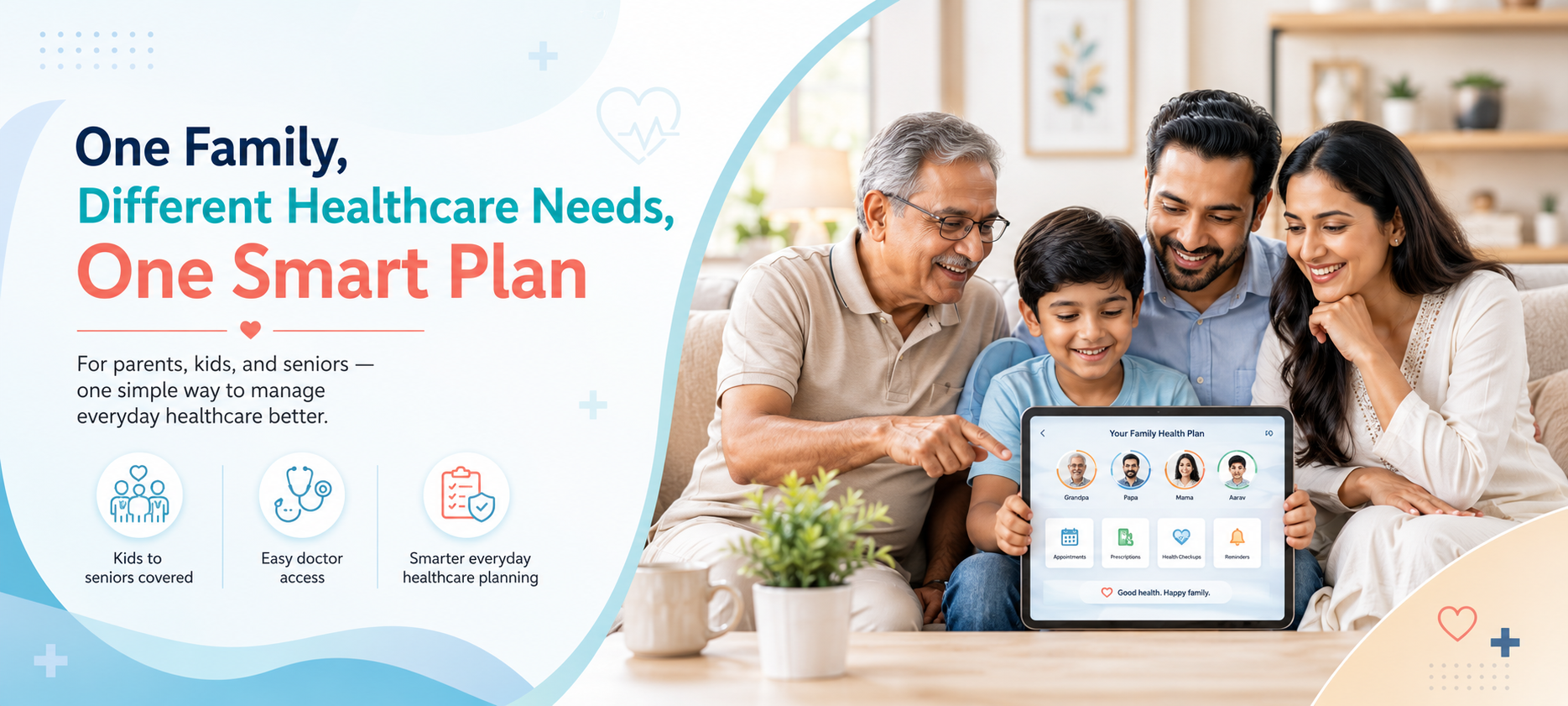
This combination means every family member gets support suited to their own needs. The toddler’s frequent visits, the parent’s routine checkup, and the grandparent’s ongoing monitoring all get covered under one plan.
Making This Easier With SwasthOPD
This is exactly what SwasthOPD is designed around. SwasthOPD builds a family healthcare plan around real, everyday usage. It covers tele-consultations, discounted diagnostics and medicines, and in-person GP visits. It also includes cashless hospitalization when it’s genuinely needed. Our guide on OPD-inclusive health insurance and our piece on planning healthcare for the whole family go deeper into how this works.
If your household’s healthcare needs look nothing alike from one member to the next, a single rigid policy probably isn’t serving you well. You can explore SwasthOPD plans to see how one flexible plan can cover very different needs. Our guide on preventive care benefits is a useful next read.