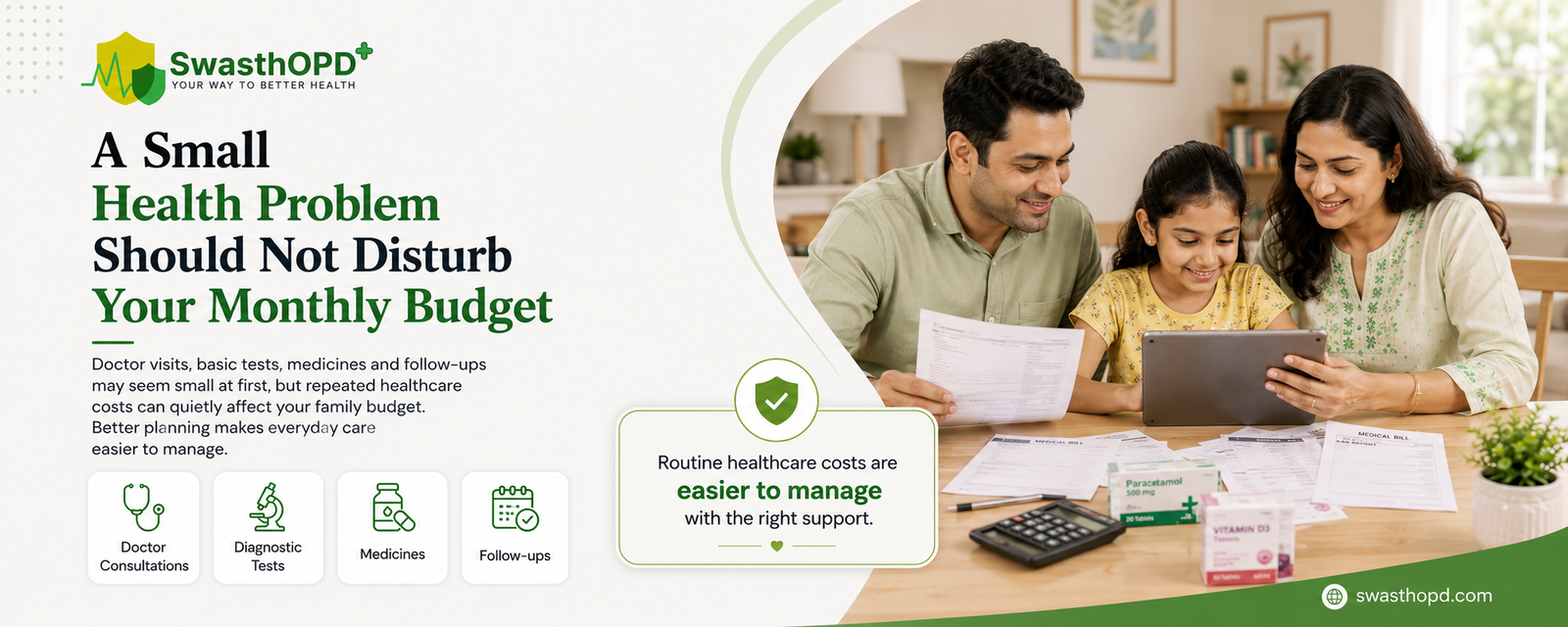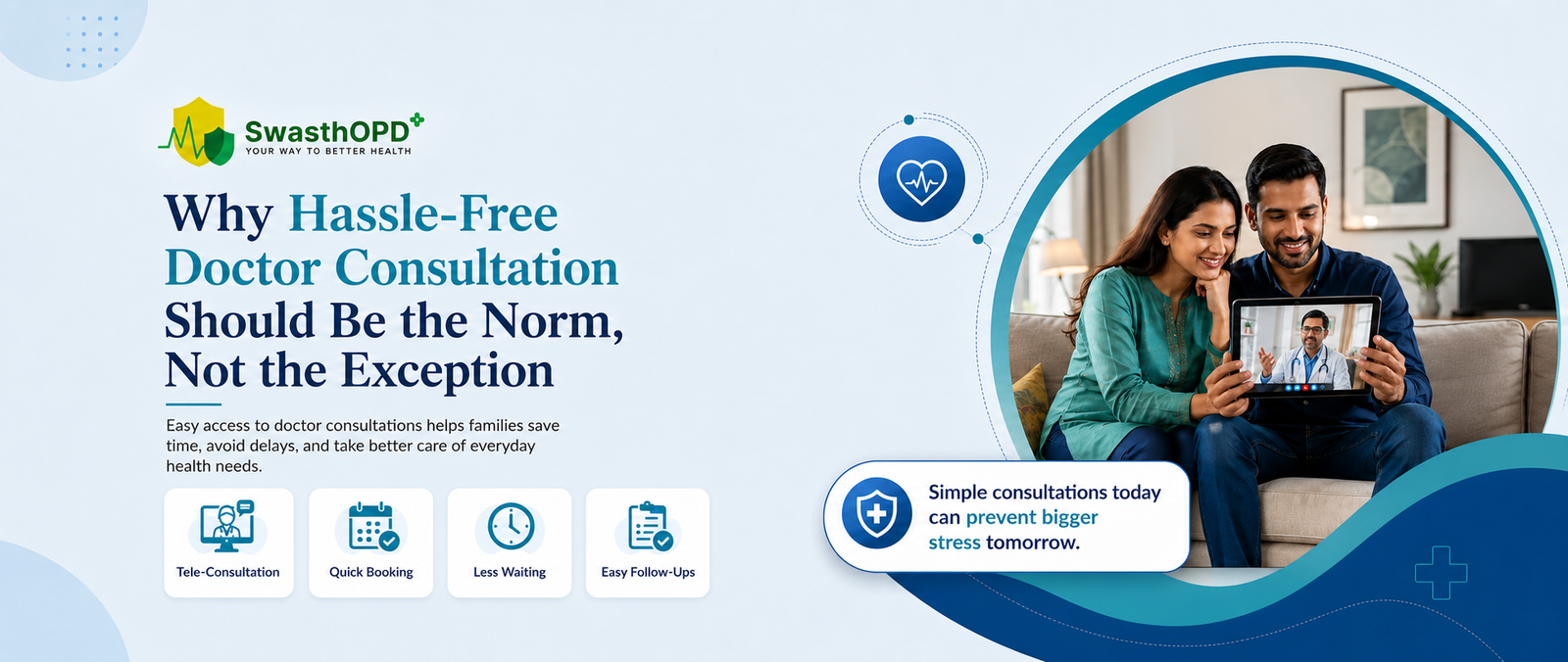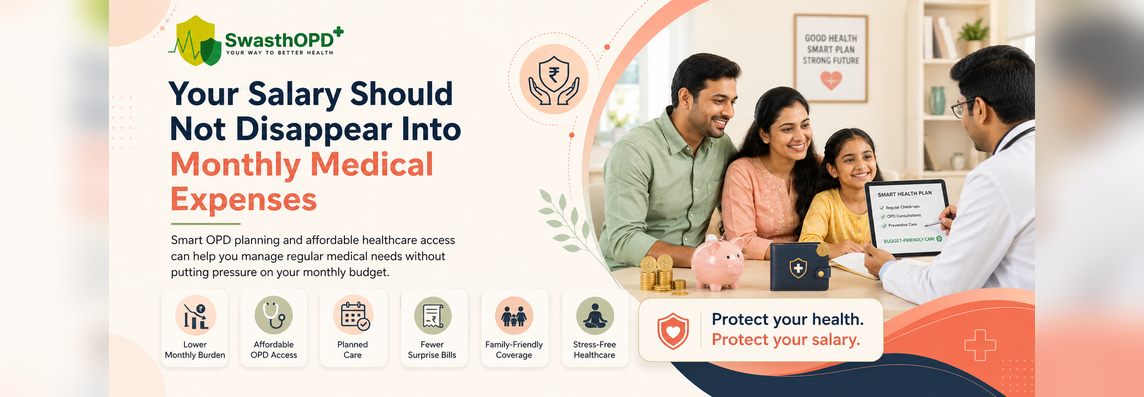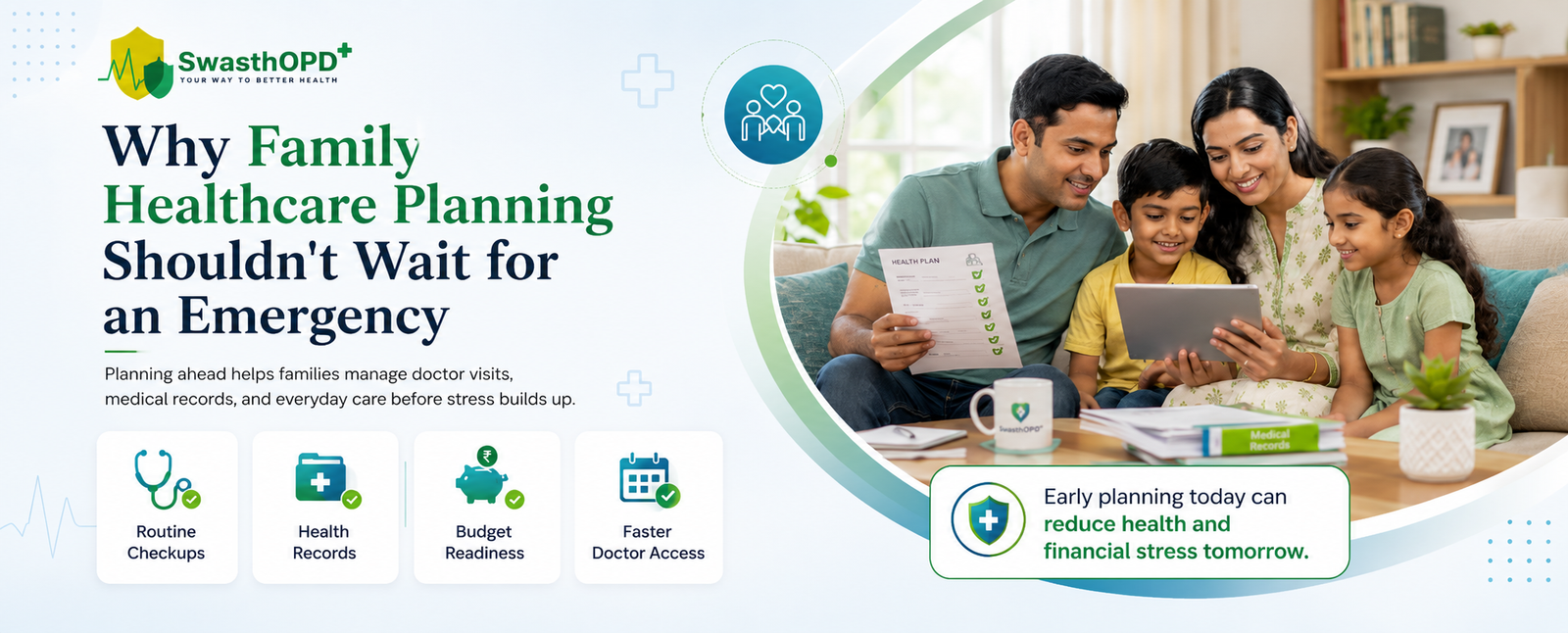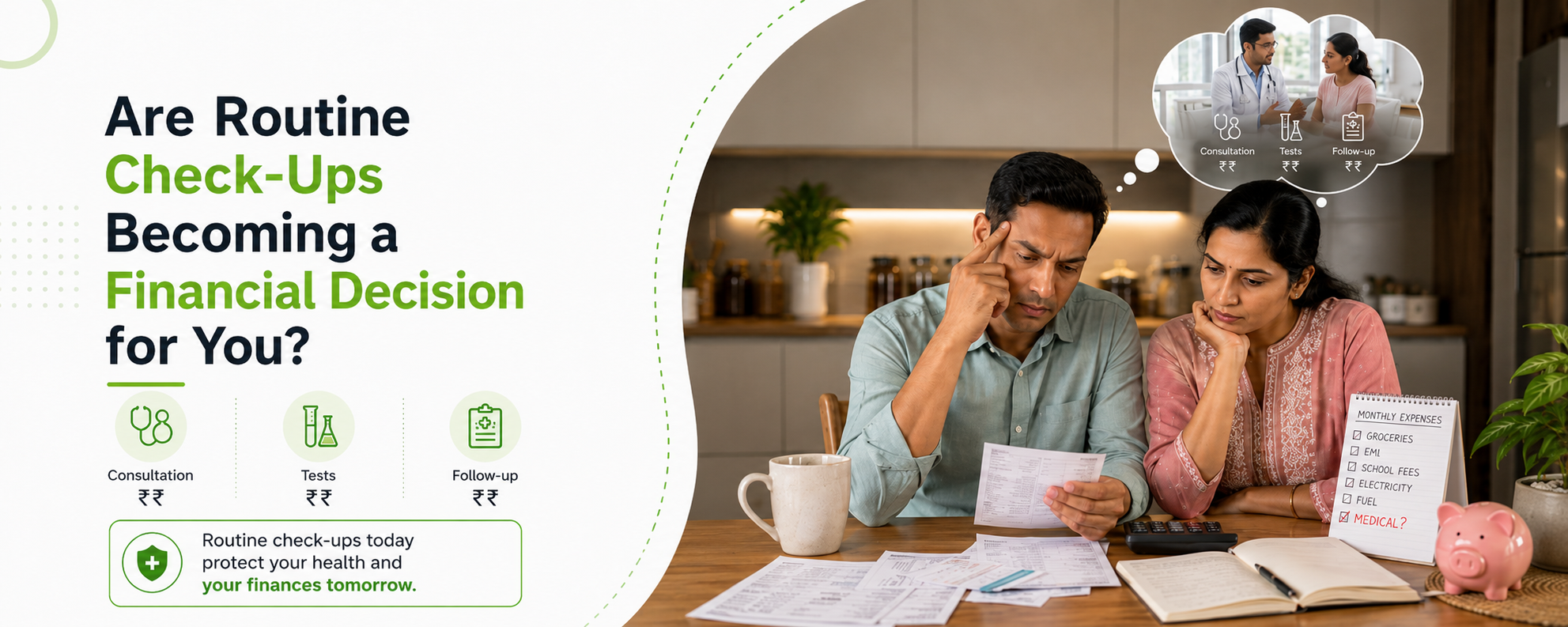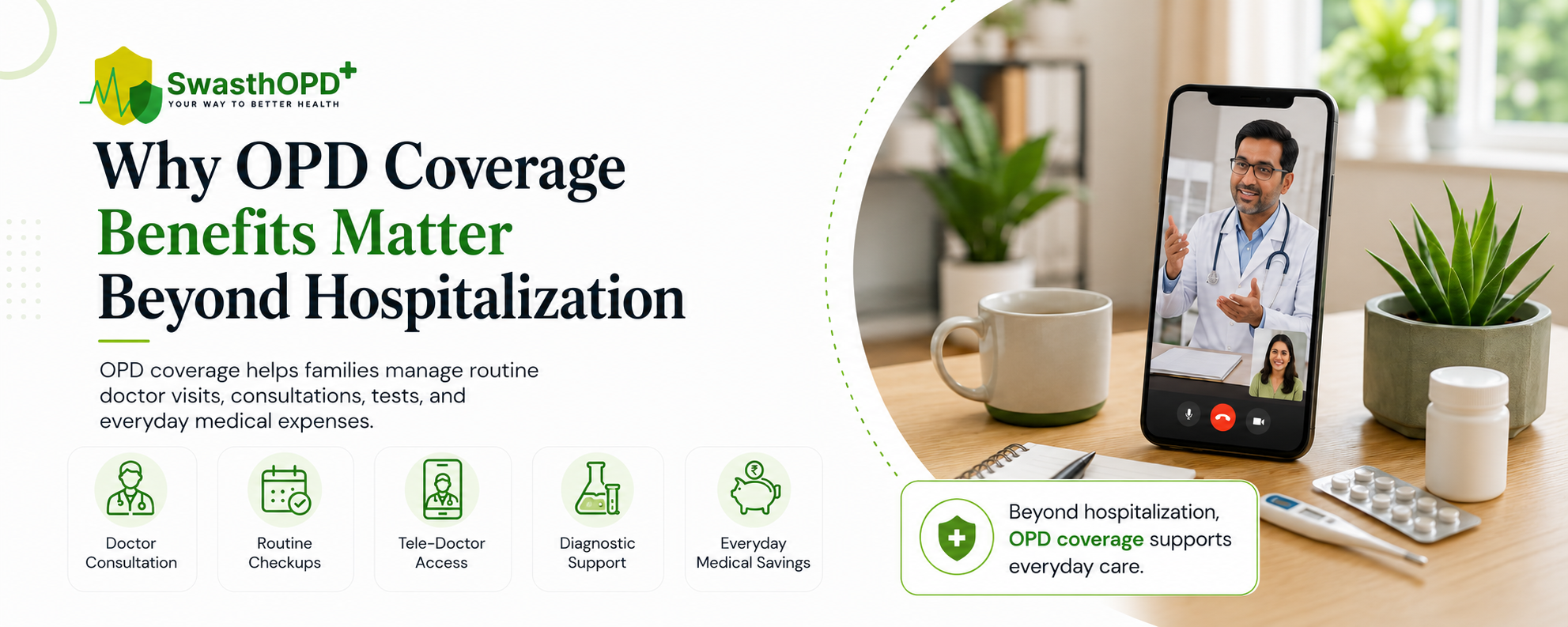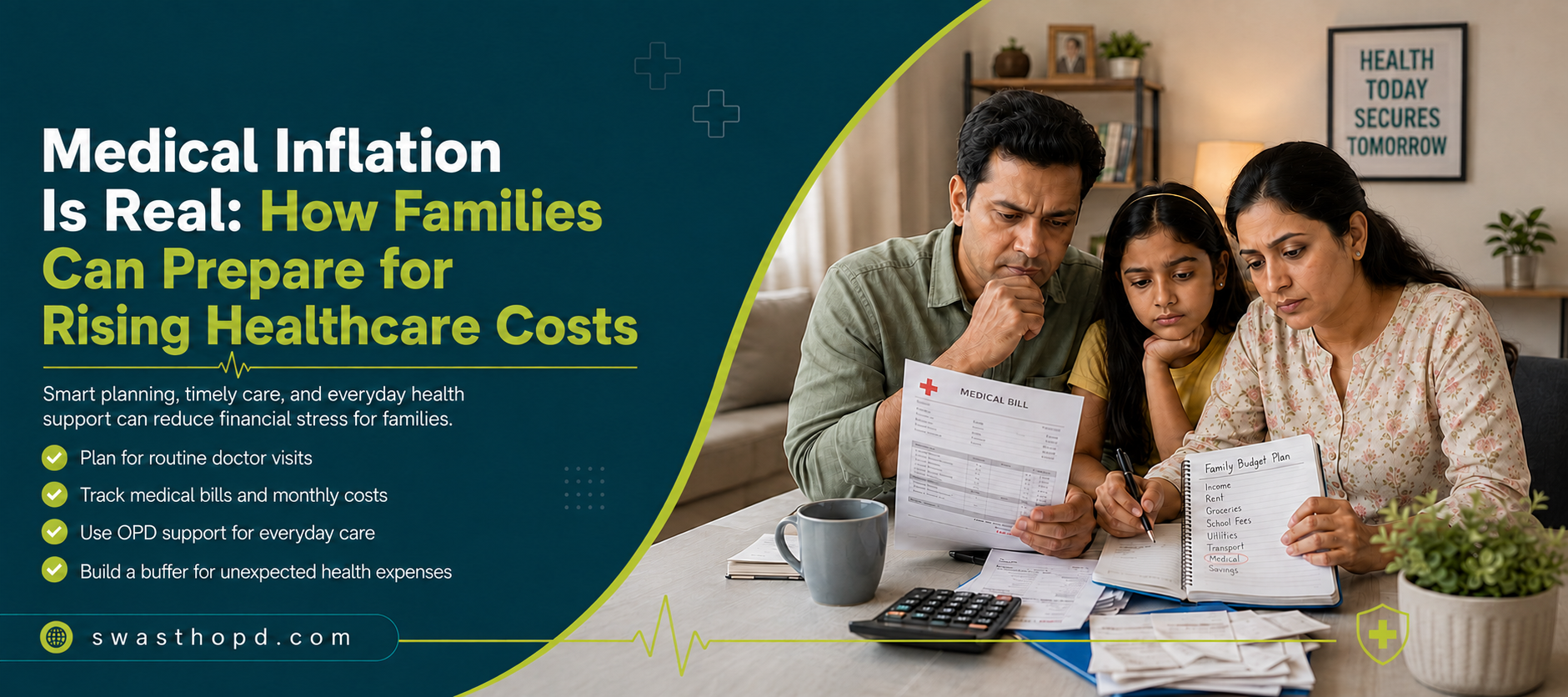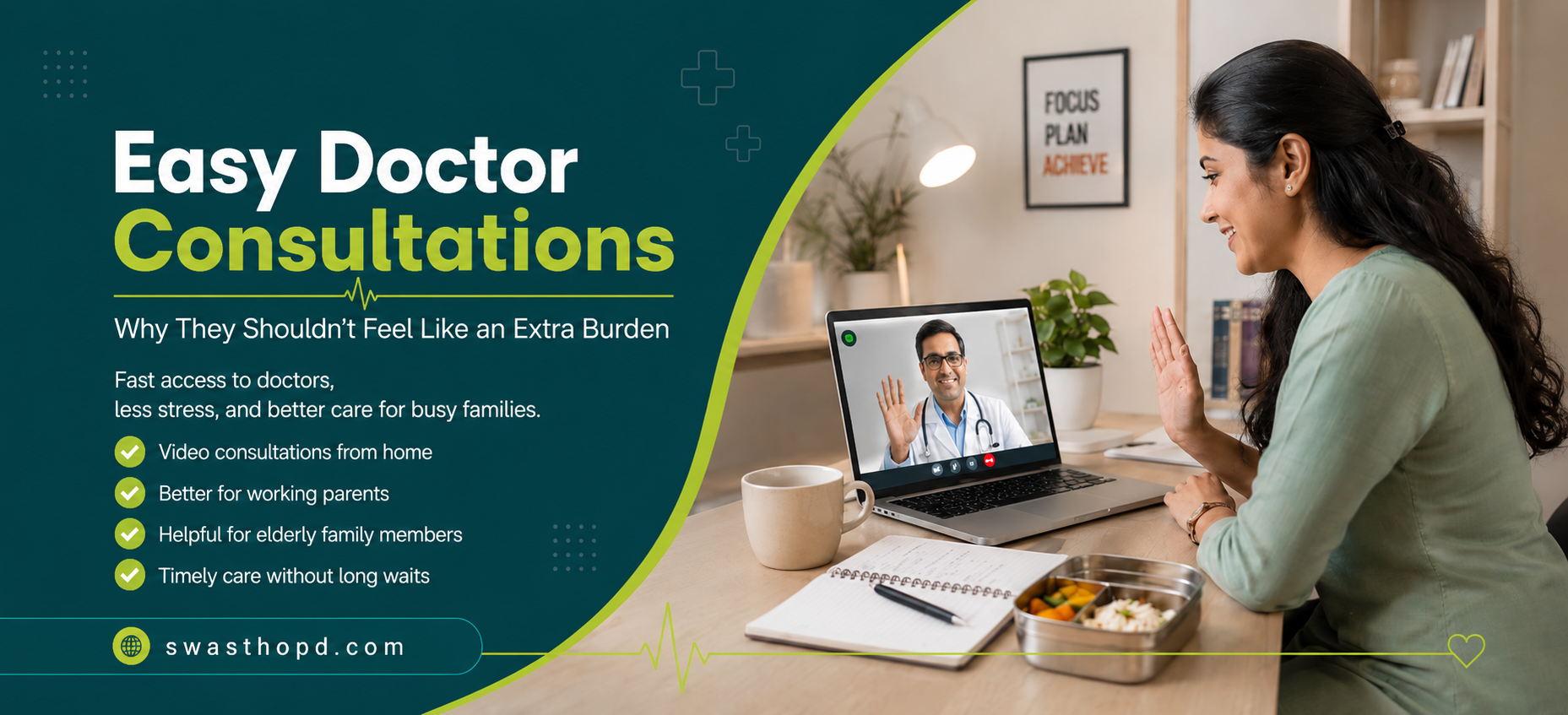
Every Indian family spends money on healthcare throughout the year — a fever here, a blood test there, a specialist consultation next month. These outpatient expenses are small individually but huge collectively. Most families spend between Rs 25,000 and Rs 60,000 every year just on OPD visits, and most of it comes entirely out of their own pocket.
This is the gap that cashless OPD benefits are designed to fill. Instead of paying at the counter and waiting weeks for reimbursement, you walk in, show your health card, get treated, and walk out. The bill goes directly to your insurer. No cash needed. No paperwork. No waiting.
In this guide, we cover everything you need to know about cashless OPD benefits — how they work, what they cover, who they help most, and how SwasthOPD makes cashless OPD accessible and affordable for every Indian family.
What Are Cashless OPD Benefits?
OPD stands for Outpatient Department. It refers to all medical care you receive without being admitted to a hospital overnight. This includes general physician visits, specialist consultations, diagnostic tests, X-rays, ultrasounds, physiotherapy, and minor procedures.
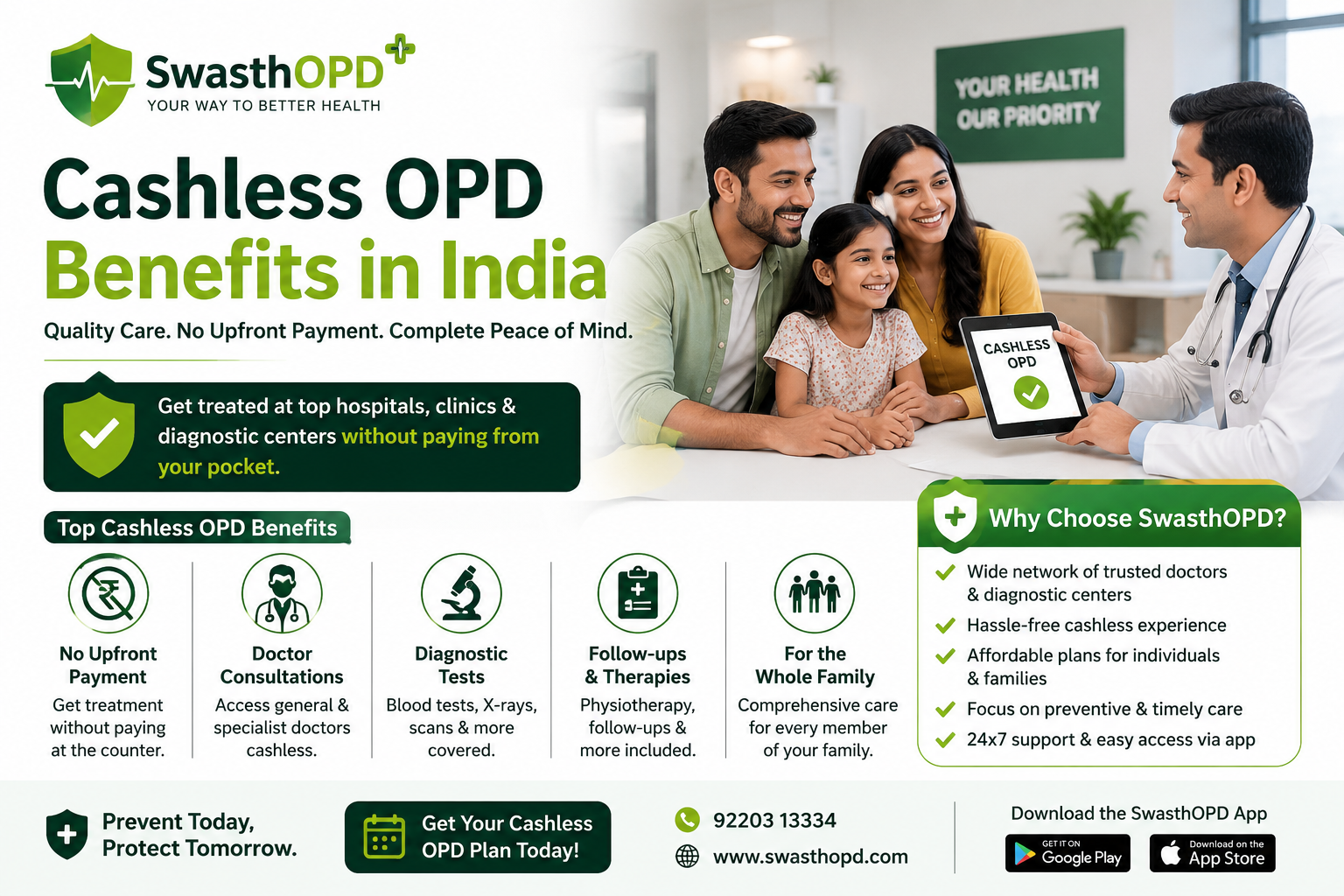
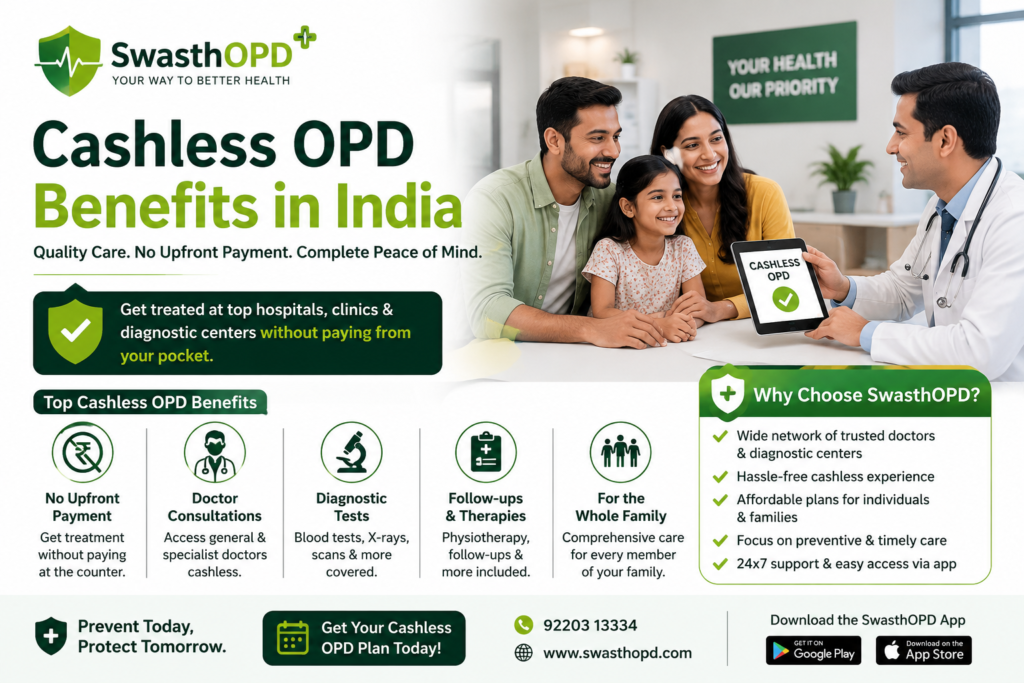
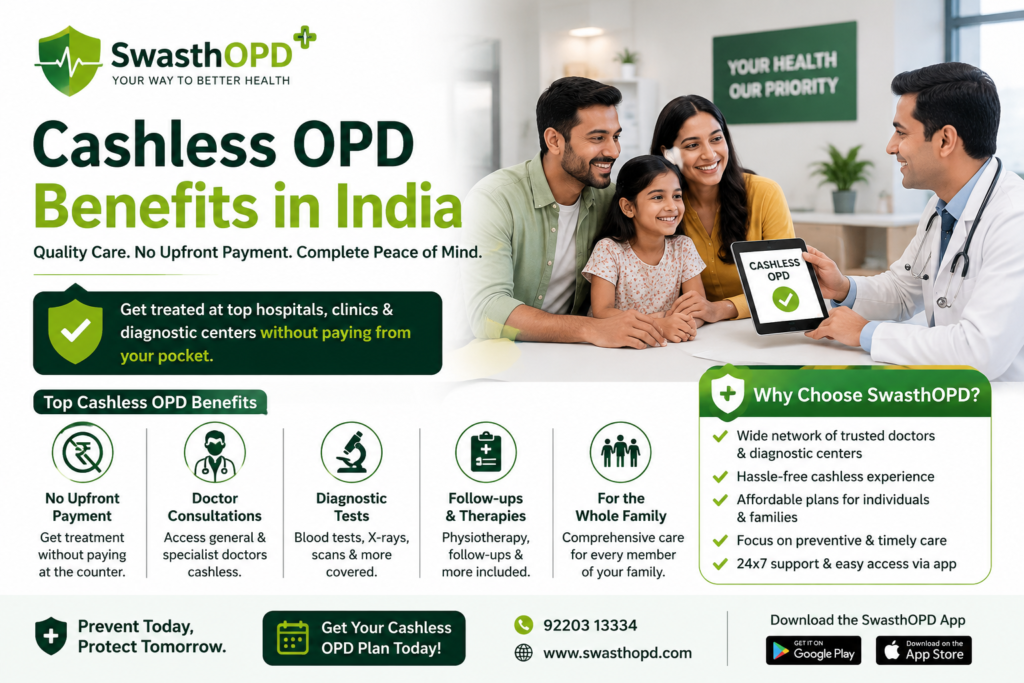
Cashless OPD benefits mean your health plan provider settles your outpatient bills directly with the network hospital or clinic. You do not pay anything at the time of your visit. The transaction happens in the background between the provider and your insurer.
This is fundamentally different from traditional health insurance, which activates only after hospitalization. With a good OPD health plan in India, your coverage is working for you every single day — not just during emergencies.
Key difference:
- Reimbursement model: You pay first, collect documents, submit a claim, and wait 5–20 days for the money back.
- Cashless OPD model: Zero payment at the counter. Insurer settles directly. Instant confirmation on your phone.
Top Cashless OPD Benefits You Should Know
1. No Money Needed at the Time of Your Visit
This is the most immediate benefit. Whether it is a routine check-up at 8 pm or an urgent consultation on a Sunday morning, you never have to worry about arranging cash or swiping a card. This removes the single biggest reason people delay doctor visits — the cost barrier at the point of care.
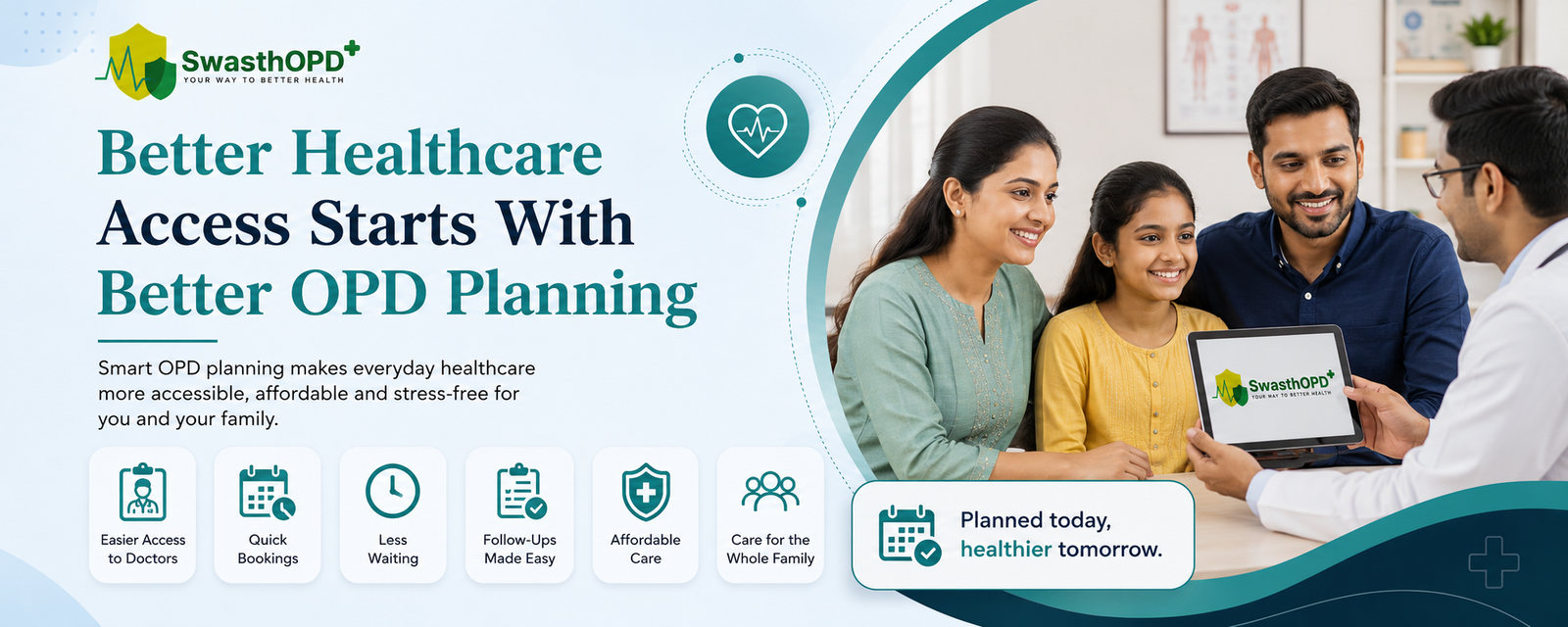
With SwasthOPD’s cashless doctor consultation plans, you simply show your digital health card and the provider takes care of the rest.
2. Covers What Regular Insurance Ignores
Traditional health insurance in India is built around hospitalization. It does nothing for your day-to-day healthcare expenses. Cashless OPD plans fill this gap completely. Here is what a good plan covers:
- General physician and specialist consultations
- Blood tests, urine tests, and full diagnostic panels
- Radiology — X-rays, ultrasounds, MRI scans (subject to plan limits)
- Physiotherapy sessions prescribed by doctors
- Pre-hospitalization OPD visits up to 30 days before admission
- Post-hospitalization follow-up consultations for up to 60 days after discharge
To understand what a full OPD health plan covers in India, read this guide: What is OPD Cover in Health Plans?
3. Encourages Timely Healthcare and Prevents Bigger Problems
One of the most underappreciated cashless OPD benefits is how it changes health behaviour. When a visit costs nothing at the counter, people go to the doctor earlier. Conditions like hypertension, diabetes, and thyroid problems are caught at manageable stages instead of becoming emergencies.
This is why preventive healthcare is at the heart of SwasthOPD’s philosophy. Early intervention through regular doctor consultations costs far less than emergency hospitalization later.
Read more: Preventive Health Checkup Plans: Why Regular Screening Matters
4. Real Savings on Annual Healthcare Spending
Consider a typical Indian family of four — two adults and two children. Realistically, this family has around 15 to 20 OPD visits per year. At an average of Rs 600 per consultation plus diagnostic test costs, annual outpatient spending easily crosses Rs 30,000 to Rs 50,000.
A cashless OPD plan from SwasthOPD brings this out-of-pocket spending down dramatically within the plan’s annual benefit. When you compare the plan premium against what you would otherwise spend, the savings are clear and real.
Explore available plans: Compare OPD Health Insurance Plans
5. Completely Paperless — No Claim Forms or Document Collection
Anyone who has filed a health insurance reimbursement claim knows how tedious it is. You need original itemised bills, diagnosis certificates, doctor registration numbers, prescription copies, and filled claim forms. Then you submit and wait.
Cashless OPD removes this entirely. There is no claim to file. No receipt to collect. The outpatient coverage without payment model means the system handles everything. You get a simple SMS confirming your benefit usage and that is all.
6. Works for the Whole Family Under One Plan
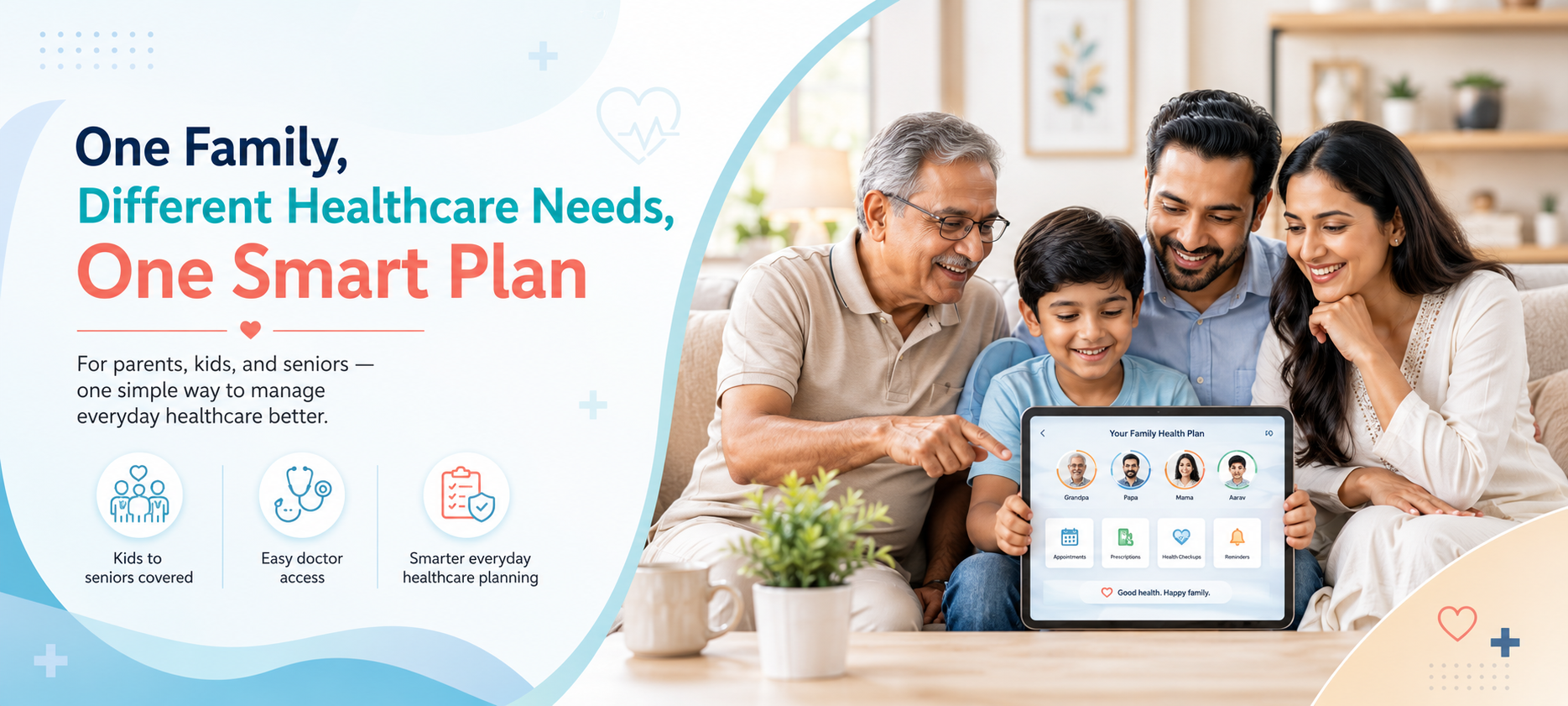
A good family OPD plan covers every enrolled member — spouse, children, and dependent parents — under a single annual benefit. One plan, one premium, one app, and every family member can walk into a network clinic cashlessly.
Learn more about family coverage: Best OPD Health Insurance for Family in India
How to Use Cashless OPD with SwasthOPD — Step by Step
- Open the SwasthOPD app or visit the member portal on swasthopd.in.
- Search for a network hospital, clinic, or diagnostic center near you.
- Book your appointment and inform the provider you are a SwasthOPD member.
- At the clinic, show your SwasthOPD digital health card or member ID.
- The provider verifies your eligibility in real time through SwasthOPD’s platform.
- Receive your consultation, diagnostic tests, or treatment — no payment needed.
- You receive an SMS confirmation of your benefit usage. Check remaining balance anytime at swasthopd.in.
| Pro Tip Always check the provider network before booking. SwasthOPD’s network includes hospitals, clinics, and diagnostic centers across Tier 1, Tier 2, and Tier 3 cities in India. Use the app to find the nearest empanelled provider. |
Who Benefits Most from Cashless OPD Plans?
Cashless OPD is valuable for almost every household in India, but it makes the biggest difference for these groups:
- Families with young children who need regular paediatric check-ups, vaccinations, and fever visits
- Senior citizens managing diabetes, hypertension, heart conditions, or arthritis who visit specialists frequently
- Individuals with chronic conditions who need regular chronic disease management consultations and diagnostic monitoring
- Working professionals who want zero hassle in healthcare — no paperwork, no queues, no reimbursement follow-ups
- Businesses looking for meaningful employee health benefits beyond standard hospitalization insurance
- Self-employed individuals and freelancers without employer-provided health coverage
For parents specifically, read: OPD Health Insurance for Parents: A Smart Way to Manage Medical Expenses
For businesses, explore: Corporate Wellness Programs at SwasthOPD
Cashless OPD vs Regular Health Insurance — What Is the Difference?
| Feature | Traditional Health Insurance | Cashless OPD Plan (SwasthOPD) |
| Covers OPD visits | No | Yes — every visit |
| Upfront payment needed | Yes | No — zero payment |
| Claim paperwork | Extensive | None required |
| Works daily | No | Yes — 365 days |
| Family coverage | Add-on cost | Single plan, all members |
| Tele-consultation | Rarely | Included in plans |
| Diagnostic test coverage | Only with IPD | Covered under OPD benefit |
Related Resources and Outbound References
To help you make a fully informed decision, here are trusted external resources alongside SwasthOPD’s own content:
Outbound References (Trusted External Sources):
- IRDAI — Insurance Regulatory and Development Authority of India — Official regulator for all health insurance products in India.
- Ayushman Bharat PMJAY — Government OPD Health Scheme — Government’s flagship health coverage programme for eligible families.
- National Health Authority of India — Policy and regulatory body overseeing digital health in India.
- WHO — Outpatient Care and Primary Health — Global evidence on the importance of outpatient and preventive healthcare.
Internal Resources from SwasthOPD:
- Compare OPD Health Insurance Plans — Find the plan that fits your family.
- Health Insurance for Doctor Visits: Why OPD Coverage Matters — Detailed guide on choosing the right OPD cover.
- Standalone OPD Health Insurance Plan — For individuals who want OPD coverage independent of hospitalization insurance.
- Preventive Health Checkup Plans — Why regular health screening matters for every family.
- Healthcare Cost Management Guide — Smart planning to reduce your family’s annual medical spending.
Conclusion
Healthcare is not just about hospitals. It is the regular check-ups, the blood tests, the specialist visits, and the follow-ups that actually keep you and your family healthy day to day. And for most Indian families, these are the costs that add up quietly and painfully.
Cashless OPD benefits solve this problem at its root. No upfront payment. No paperwork. No waiting for reimbursement. Just simple, accessible, everyday healthcare for your whole family.
SwasthOPD is India’s dedicated OPD and wellness platform, built specifically to make this kind of healthcare accessible to every family. With an extensive healthcare network, transparent plans, and genuine cashless access, SwasthOPD is the partner your family’s health deserves.
Explore all plans and get started today: https://swasthopd.in/
Site Reference: SwasthOPD Sitemap
Frequently Asked Questions (FAQs)
Q1. What does cashless OPD mean?
A: Cashless OPD means you can visit a network doctor, clinic, or diagnostic center and receive treatment without paying anything at the counter. Your health plan provider settles the bill directly with the provider on your behalf.
Q2. Is cashless OPD the same as cashless hospitalization?
A: No. Cashless hospitalization covers in-patient treatment after admission. Cashless OPD covers outpatient visits — doctor consultations, diagnostic tests, and follow-ups — without any hospital stay required.
Q3. Can I use cashless OPD for my parents and children?
A: Yes. SwasthOPD family plans cover all enrolled members including dependent parents, spouse, and children. View family plans here.
Q4. What is the difference between cashless OPD and OPD reimbursement?
A: With cashless OPD, you do not pay anything at the time of your visit. With reimbursement, you pay upfront and claim the money back later, which can take 5 to 20 business days and requires document submission.
Q5. Does cashless OPD cover medicines and pharmacy costs?
A: Some SwasthOPD plans include a pharmacy wallet for prescribed medicines. Check plan details at swasthopd.in.
Q6. Are tele-consultations included in cashless OPD benefits?
A: Yes. SwasthOPD plans include tele-doctor consultation benefits where you can consult qualified doctors from your phone at no additional cost. Learn more: Outpatient Insurance Cover in India
Q7. How do I find a cashless OPD provider near me?
A: Log in to the SwasthOPD app or visit swasthopd.in and use the provider search to find empanelled hospitals, clinics, and diagnostic centers in your city.
SwasthOPD | Your Partner in Health & Wellness
swasthopd.in | hello@swasthopd.com | 1800 309 2740
© 2026 SwasthOPD. All Rights Reserved.