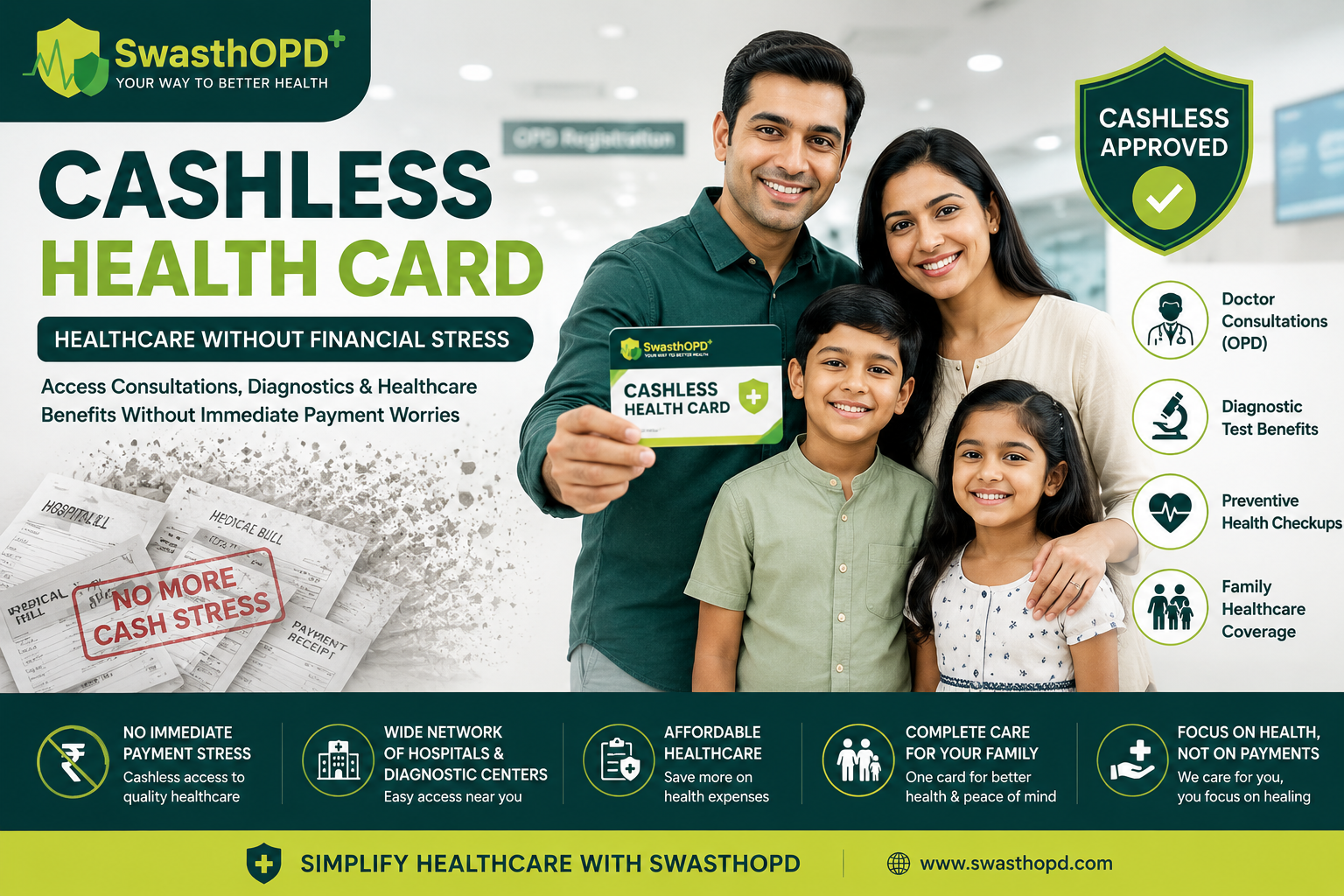
Quick answer: A Cashless Health Card lets you access doctor consultations, diagnostic tests, and pharmacy discounts without paying upfront. You show the card at a network provider, the cost is settled directly, and you skip the pay-first, claim-later cycle. It’s built for everyday medical expenses, not just hospital stays.
Most people think of health insurance as something for emergencies. A hospital bill. A surgery. A long stay in the ICU. But that’s not where most of your medical spending happens.
It happens in clinics. At diagnostic labs. At the pharmacy counter. These small, frequent costs add up fast — and traditional insurance rarely covers them.
That’s the gap a Cashless Health Card fills. It covers the day-to-day medical expenses that drain your wallet quietly over a year. This guide explains what the card is, how it works, and who benefits most from it.
What is a Cashless Health Card?
A Cashless Health Card is a digital health card that lets you access outpatient medical services without paying out of pocket at the time of treatment.
You use it at a network doctor, lab, or pharmacy. The provider settles the bill directly through your plan. No cash. No reimbursement forms. No waiting weeks to get your money back.
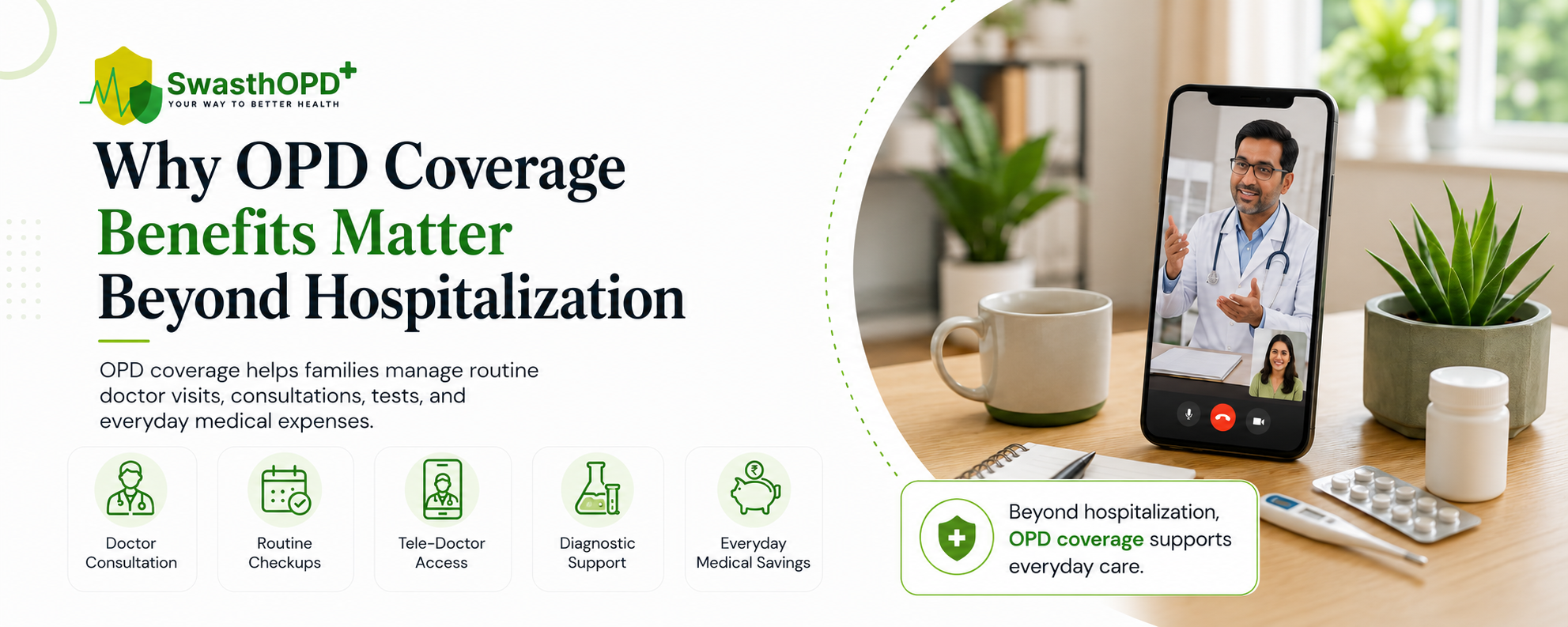
It focuses on OPD coverage — the Outpatient Department services you actually use most often. Think consultations, blood tests, scans, and routine checkups.
How it works
The card connects you to a network of doctors and diagnostic centers. When you visit, you show your card or use the linked health app.
The cost is verified and approved against your plan. You either pay nothing or a discounted amount, depending on your coverage. The rest is handled behind the scenes.
Key features
A good Cashless Health Card covers more than one service. Here’s what to expect:
- Cashless doctor consultations: General physician and specialist consultation without upfront payment.
- Diagnostic test benefits: Blood tests, radiology services, and preventive health checkups, often at a discount.
- Pharmacy discounts: Savings on prescribed medicines.
- Easy healthcare access: Telemedicine and in-person options through a single digital platform.
Why healthcare costs are a growing concern
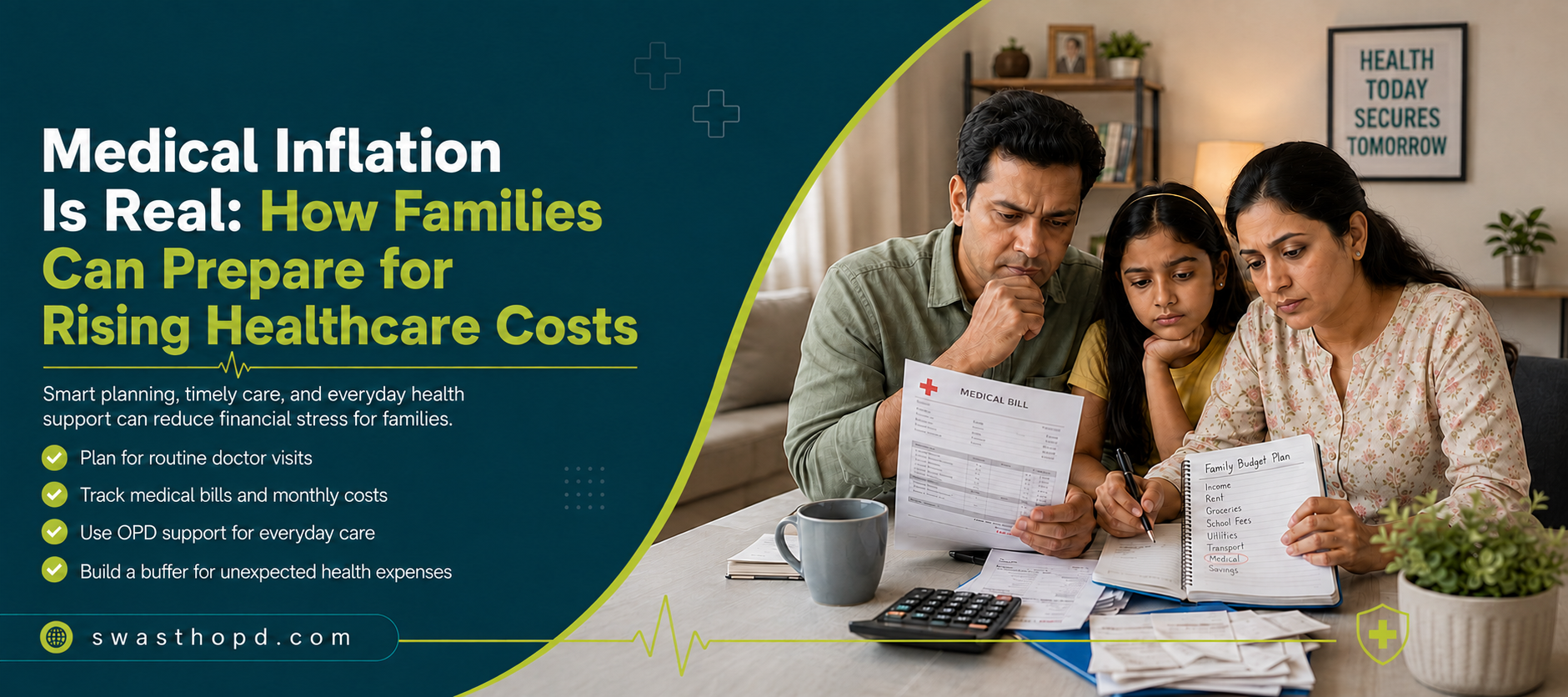
Medical costs in India keep climbing. The price of a routine doctor visit, a basic blood panel, or a specialist appointment has risen steadily over the past decade.
These aren’t rare expenses. They’re regular ones.
Rising medical expenses
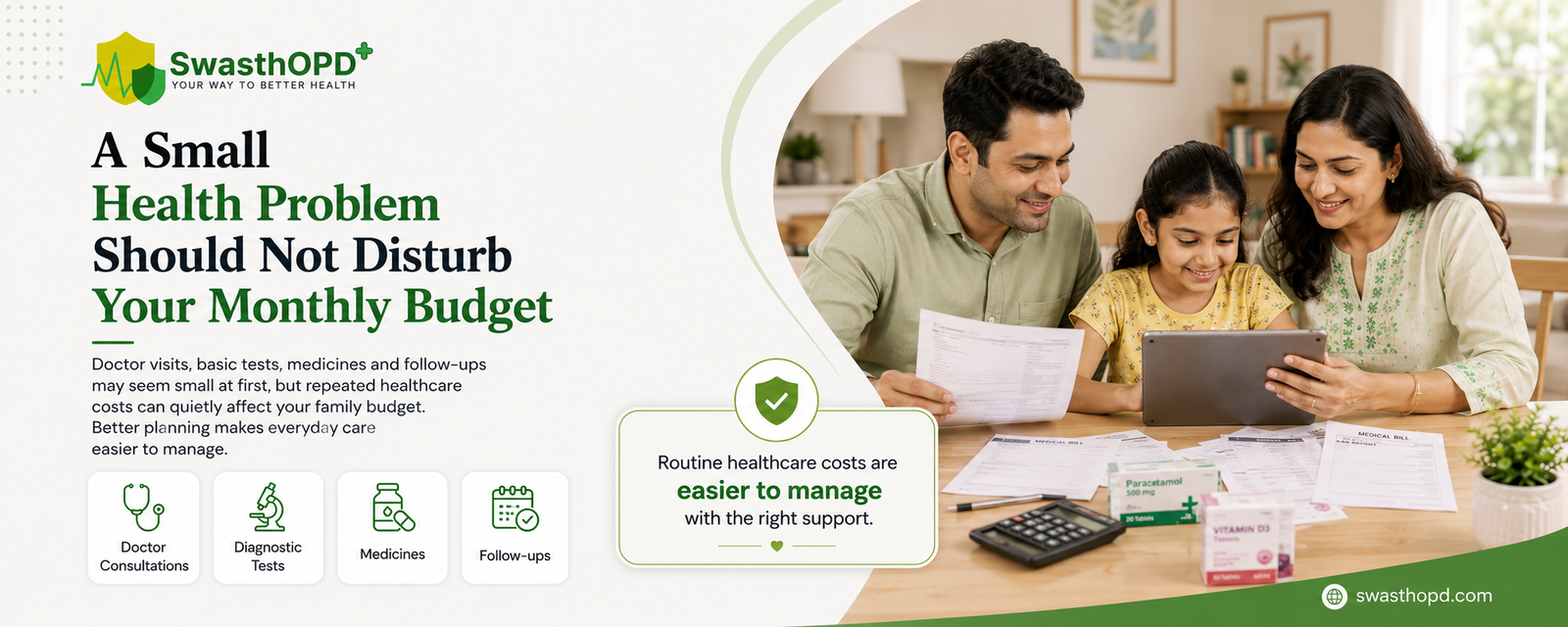
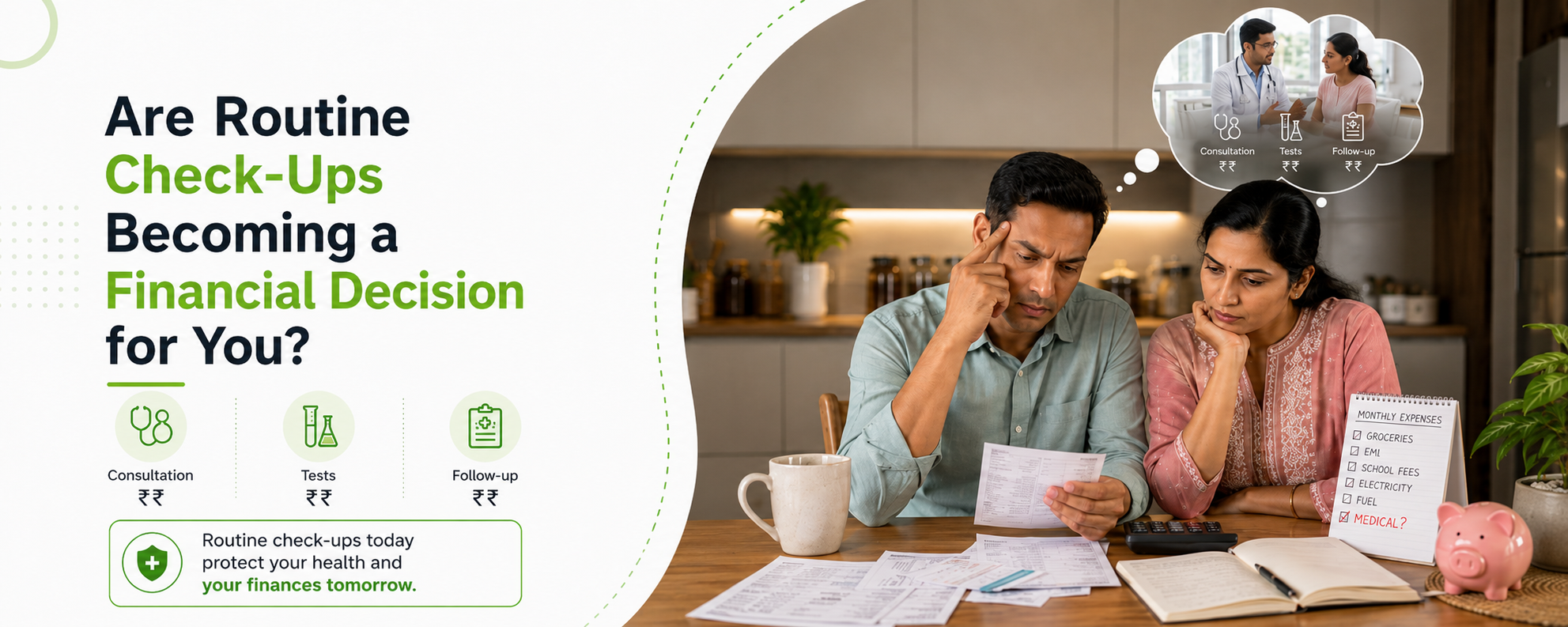
A single specialist consultation can cost several hundred rupees. Add diagnostic tests, and one clinic visit easily crosses a thousand. Multiply that across a family over a year, and the number gets serious.
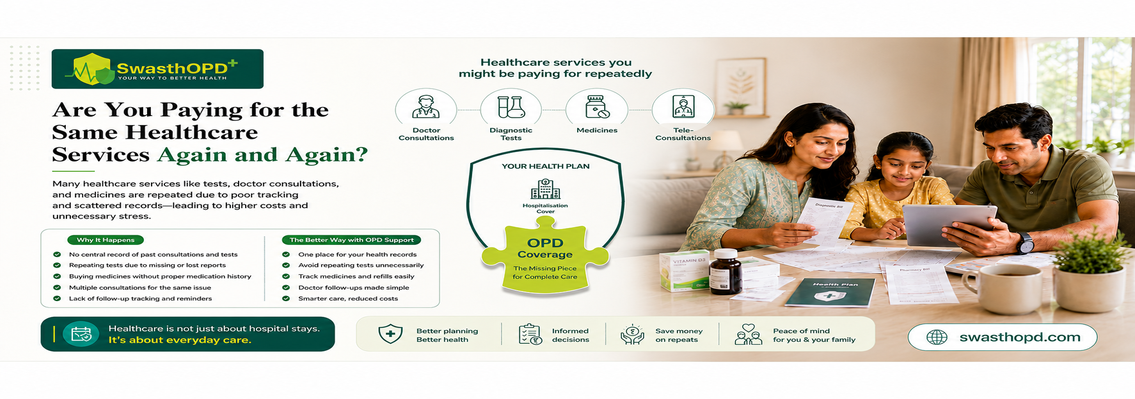
Most of this spending never touches your insurance policy. Standard health insurance kicks in only when you’re hospitalized. Everyday care comes straight out of your pocket.
The impact on families
This creates real financial stress. Families delay tests they can’t afford. They skip follow-up visits. They wait until a small problem becomes a big one.
That delay costs more in the end — both in money and in health. A condition caught early is cheaper and easier to treat than one caught late.
Top benefits of a Cashless Health Card
The value of cashless healthcare benefits comes down to two things: access and savings. Here’s how that plays out.
No upfront payment stress
You don’t pay first and claim later. You get treated, and the cost is settled directly.
This matters most during a health scare. The last thing you want when you’re worried about a test result is to scramble for cash.
Easy access to doctor consultations
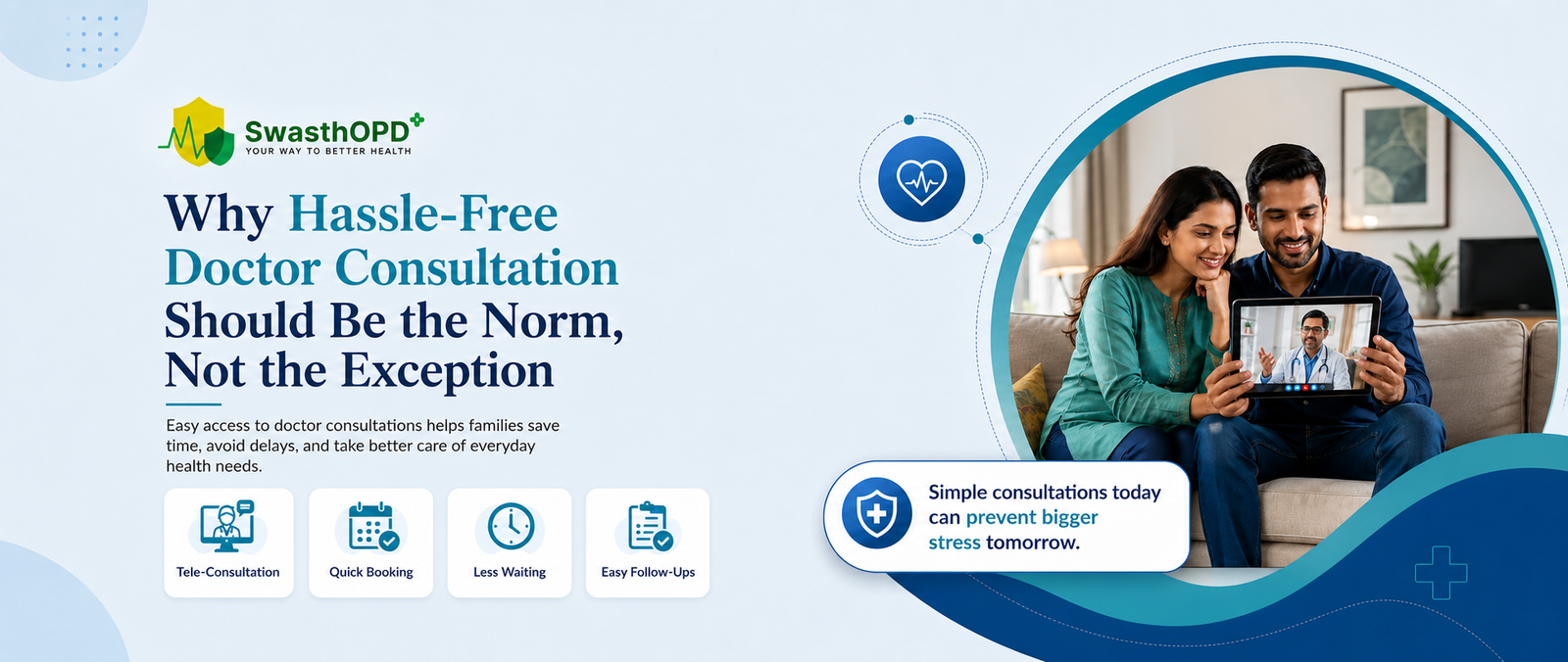
You can book general physician consultations and specialist consultations through the same plan. Many cards include unlimited teleconsultation, so you can talk to a doctor without leaving home.
Diagnostic test benefits
Blood tests, radiology services, and preventive screenings are often covered at a steep discount. SwasthOPD plans, for example, offer up to 50% off diagnostic and radiology services.
That’s real money saved on tests you’d otherwise pay full price for.
Healthcare discounts
Beyond consultations and tests, a Cashless Health Card usually includes pharmacy discounts and wellness program benefits. Small savings on medicines and fitness add up over time.
How a Cashless Health Card works, step by step
The process is simple. Here’s the full path from sign-up to treatment.
- Register: Choose a plan and create your account. Your digital health card is issued and linked to a health app.
- Find a provider: Locate a network hospital, clinic, or diagnostic center near you.
- Verify and approve: Show your card. The provider confirms your coverage and approves the service.
- Get cashless care: Receive your consultation, test, or treatment. The cost is settled directly — no reimbursement paperwork.
That’s it. No claim forms. No chasing receipts.
Cashless Health Card vs traditional healthcare payments
The difference between the two models is straightforward. One makes you wait for your money. The other doesn’t.
The traditional payment model
You pay the full bill at the clinic or lab. Then you collect receipts, fill out forms, and submit a claim. Weeks later, you might get reimbursed — if everything was documented correctly.
The cashless model
You get treated. The cost is settled on the spot. No claim, no wait.
Here’s how they compare:
| Factor | Traditional Payment | Cashless Health Card |
|---|---|---|
| Cost | Pay full amount upfront | Pay nothing or a discounted amount |
| Convenience | Manage forms and receipts | Show card and go |
| Documentation | Heavy paperwork | Minimal or none |
| Speed | Reimbursement takes weeks | Instant access |
Who should have a Cashless Health Card?
This card isn’t only for one type of person. But some groups gain more than others.
Families
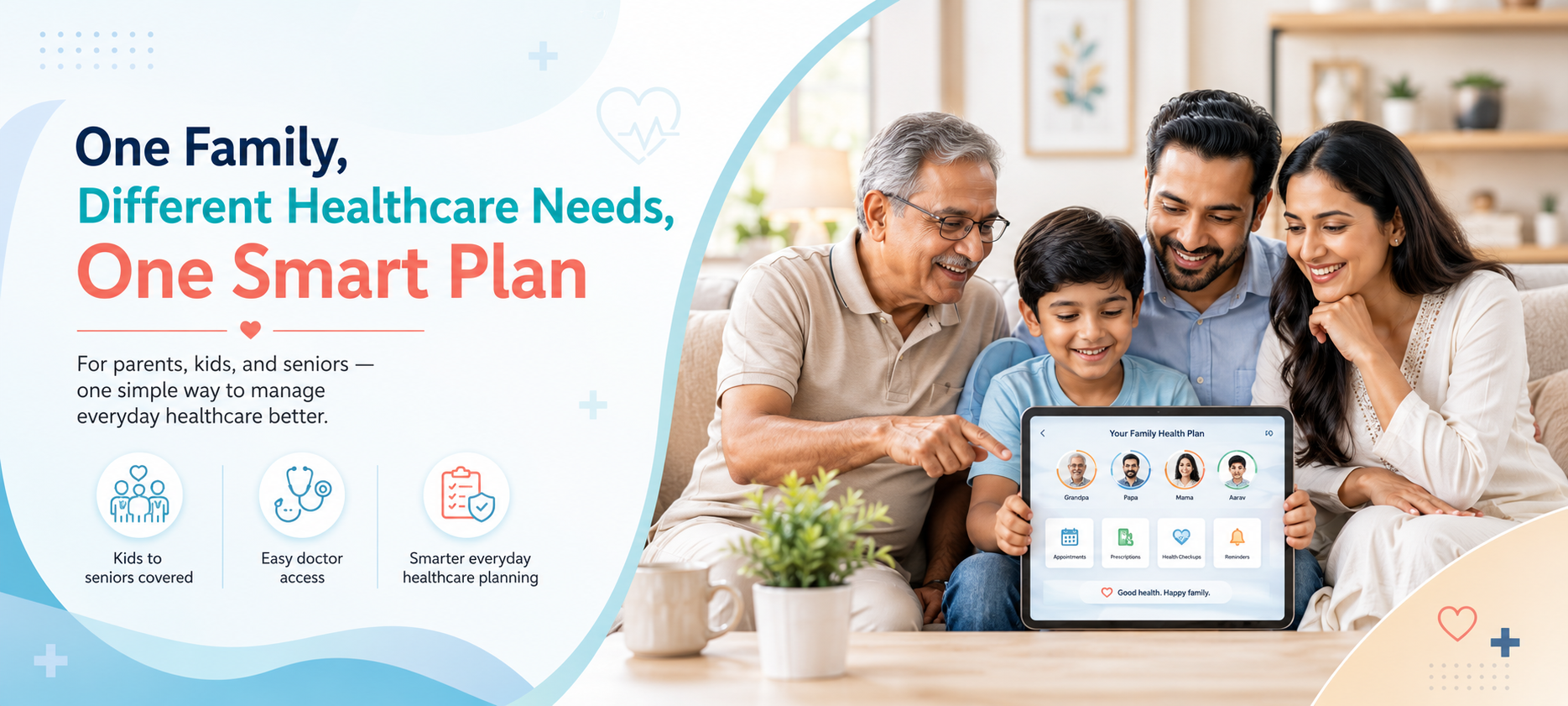
Families with children visit clinics often. Coughs, fevers, vaccinations, checkups. A family healthcare plan with cashless OPD benefits covers all of them under one card.
Working professionals
Busy professionals value speed. Teleconsultation and instant cashless access mean less time off work and less hassle.
Senior citizens
Older adults need more frequent consultations and tests. A card that covers OPD and diagnostics reduces a major recurring cost. Medical insurance for senior citizens pairs well with OPD coverage.
People with chronic conditions
If you manage diabetes, blood pressure, or another long-term condition, you see doctors and run tests regularly. Cashless OPD benefits cut the steady drain of these recurring costs.
How a Cashless Health Card saves you money
The savings come from three places. Each one matters on its own. Together, they add up.
Lower out-of-pocket spending
You pay discounted rates on consultations, tests, and medicines. Across a year of regular care, that discount becomes a meaningful sum.
Fewer delayed treatments
When care is affordable, you don’t put it off. Early treatment is cheaper than late treatment, almost every time.
More preventive care
A card that covers checkups encourages you to get screened regularly. Preventive healthcare catches problems before they become expensive ones.
Why choose SwasthOPD for cashless healthcare
SwasthOPD is a healthcare platform built around OPD and wellness. It’s been operating for over 12 years, serving individuals, families, and businesses across India.
Here’s what its plans offer.
Affordable health plans
The Swasth Life Plan covers four members for ₹5,000 a year. It includes unlimited tele doctor consultations and in-person physician visits.
Cashless OPD benefits
Plans include discounted diagnostics, radiology, and pharmacy. You get up to 50% off diagnostic and radiology services and up to 20% off prescribed pharmacy.
A real network of doctors and diagnostic centers
SwasthOPD partners with established providers, giving you access to top doctors and diagnostic centers across the country.
Family-friendly plans
A single plan can cover up to four members. One card, the whole household.
Wellness and preventive care
Plans go beyond treatment. They include mental health support, fitness programs, and preventive checkups. You can build your own plan to match your needs.
How to choose the right Cashless Health Card
Not every card is the same. Check these five things before you decide.
- Coverage benefits: Confirm what’s actually included — consultations, tests, pharmacy, and checkups.
- Network hospitals: Make sure there are network providers near you.
- OPD benefits: This is the core. Check the OPD limits and discounts carefully.
- Family coverage: If you have a household, look for a plan that covers multiple members.
- Customer support: Good support matters when you need help fast.
The future of cashless healthcare in India
Healthcare in India is going digital. Digital health cards, teleconsultation, and app-based access are becoming standard, not optional.
This shift makes care more accessible. People in smaller towns can reach doctors they couldn’t before. Costs become clearer and easier to manage.
The result is smarter healthcare. You spend less, plan better, and catch problems earlier. For more on this, see SwasthOPD’s guide on healthcare accessibility.
Healthcare without the financial stress
Most of your medical spending isn’t on hospital stays. It’s on the everyday stuff — consultations, tests, and medicines. Traditional insurance ignores that. A Cashless Health Card doesn’t.
It cuts your out-of-pocket costs, removes the pay-first hassle, and encourages the preventive care that keeps bills low. For families, professionals, seniors, and anyone managing a chronic condition, that’s a practical way to spend less and stay healthier.
If you want to cover your everyday medical expenses under one plan, explore SwasthOPD’s cashless OPD plans and pick the one that fits your household.
For wider context on outpatient care standards, the World Health Organization offers useful resources on accessible primary care.
Frequently asked questions
What is a Cashless Health Card?
A Cashless Health Card is a digital health card that lets you access outpatient services — doctor consultations, diagnostic tests, and pharmacy — without paying upfront. The cost is settled directly through your plan at network providers.
How does a Cashless Health Card work?
You register for a plan and receive a digital card. At a network clinic, lab, or pharmacy, you show the card. The provider verifies your coverage and settles the bill directly, so you pay nothing or a discounted amount.
What healthcare services are covered?
Most cards cover general physician and specialist consultations, blood tests, radiology services, preventive health checkups, and pharmacy purchases. Many also include teleconsultation and wellness programs.
Can families use a Cashless Health Card?
Yes. Many plans are built for families. SwasthOPD’s Life Plan, for example, covers up to four members under one plan, so the whole household shares the same benefits.
How does a Cashless Health Card reduce healthcare costs?
It cuts costs in three ways: discounted rates on consultations, tests, and medicines; fewer delayed treatments that get expensive later; and easier access to preventive checkups that catch problems early.